Company News
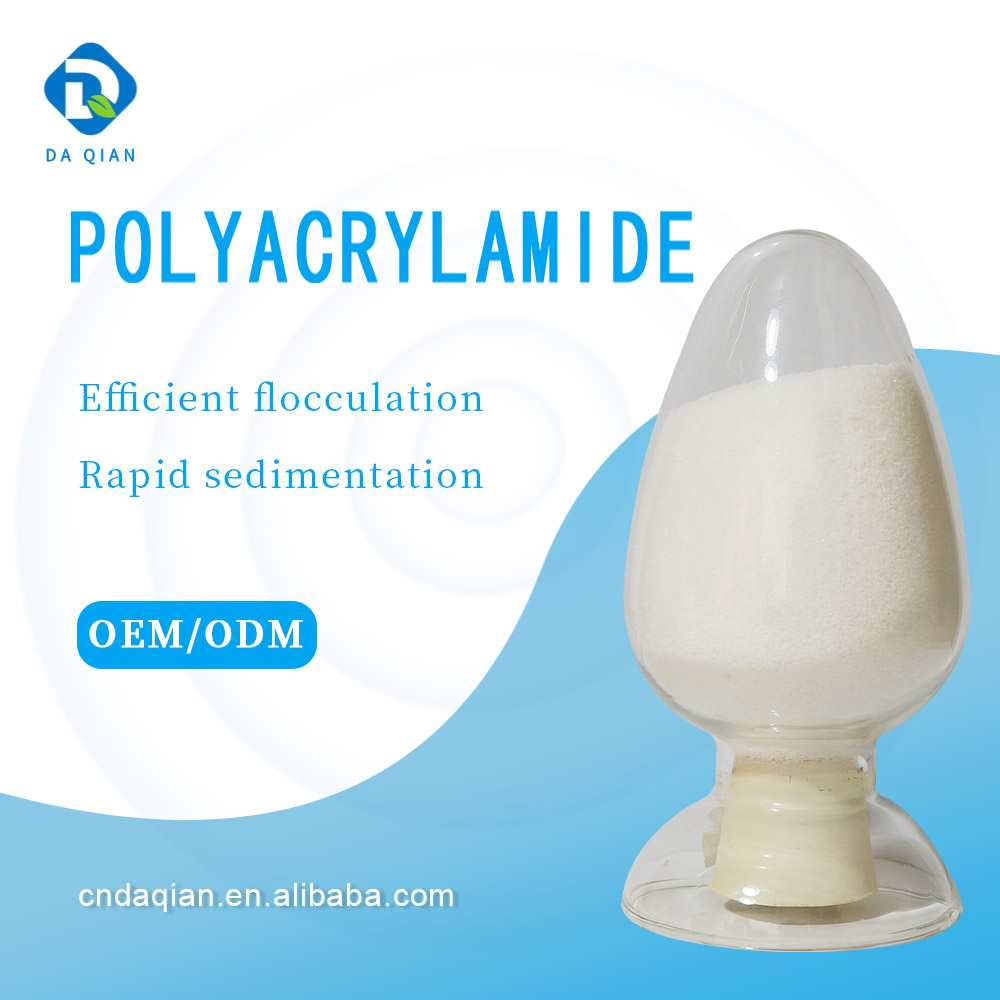
How to Choose the Right Polyacrylamide (PAM)?
Choosing the right Polyacrylamide (PAM) type is important for improving flocculation performance and reducing wastewater treatment costs.
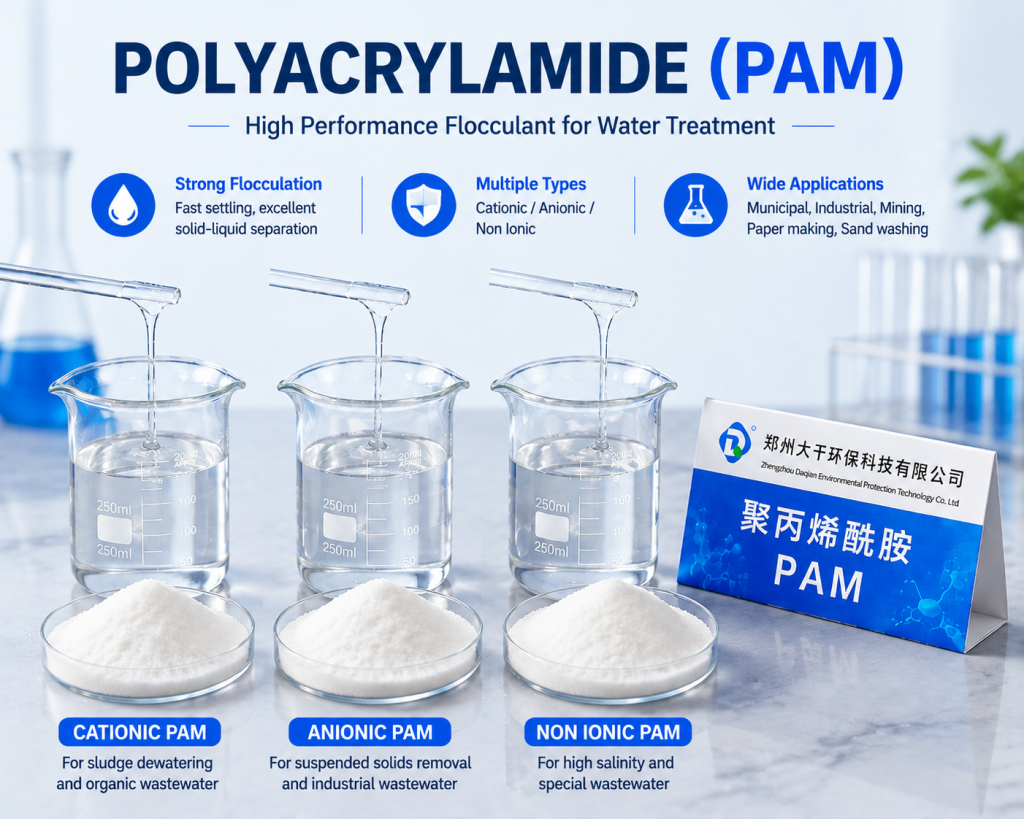
Based on ionic characteristics, PAM is mainly divided into:
- Anionic Polyacrylamide (APAM)
- Cationic Polyacrylamide (CPAM)
- Non Ionic Polyacrylamide (NPAM)
Different PAM types are suitable for different wastewater applications.
1. Anionic Polyacrylamide (APAM)
Anionic PAM contains negatively charged groups and works through adsorption and bridging, helping suspended particles form larger flocs and settle faster.
Main Features:
✔ Strong flocculation performance
✔ Fast settling speed
✔ Suitable for high suspended solids wastewater
Applications:
- Sand Washing Wastewater
- Mining Tailings Treatment
- Coal Washing Wastewater
- Ceramic and industrial wastewater
2. Cationic Polyacrylamide (CPAM)
Cationic PAM contains positively charged groups and is mainly used for sludge conditioning and dewatering.
Main Features:
✔ Excellent sludge conditioning performance
✔ Improves dewatering efficiency
✔ Reduces sludge moisture content
Applications:
- Municipal Sludge Dewatering
- Paper Mill Wastewater
- Food, Textile and Chemical Wastewater
3. Non Ionic Polyacrylamide (NPAM)
Non Ionic PAM has low charge density and mainly works through molecular adsorption and bridging.
It provides better adaptability under complex wastewater conditions.
Main Features:
✔ Good chemical stability
✔ Strong adaptability to pH changes
✔ Suitable for special industrial wastewater
Applications:
- Acidic Mining Wastewater
- High Salt Wastewater
- Complex Industrial Wastewater