Company News
Why Your PAM Solution Has “Fish Eyes” (Undissolved Lumps)?
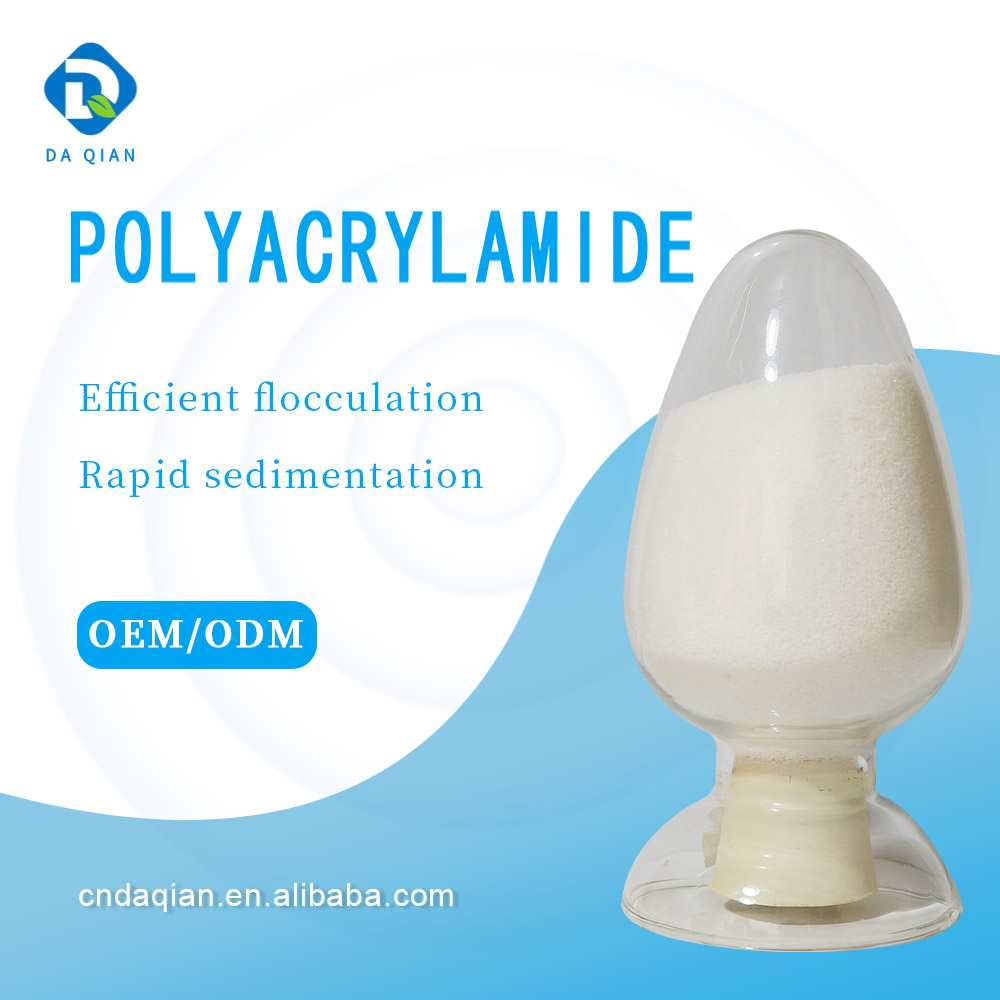
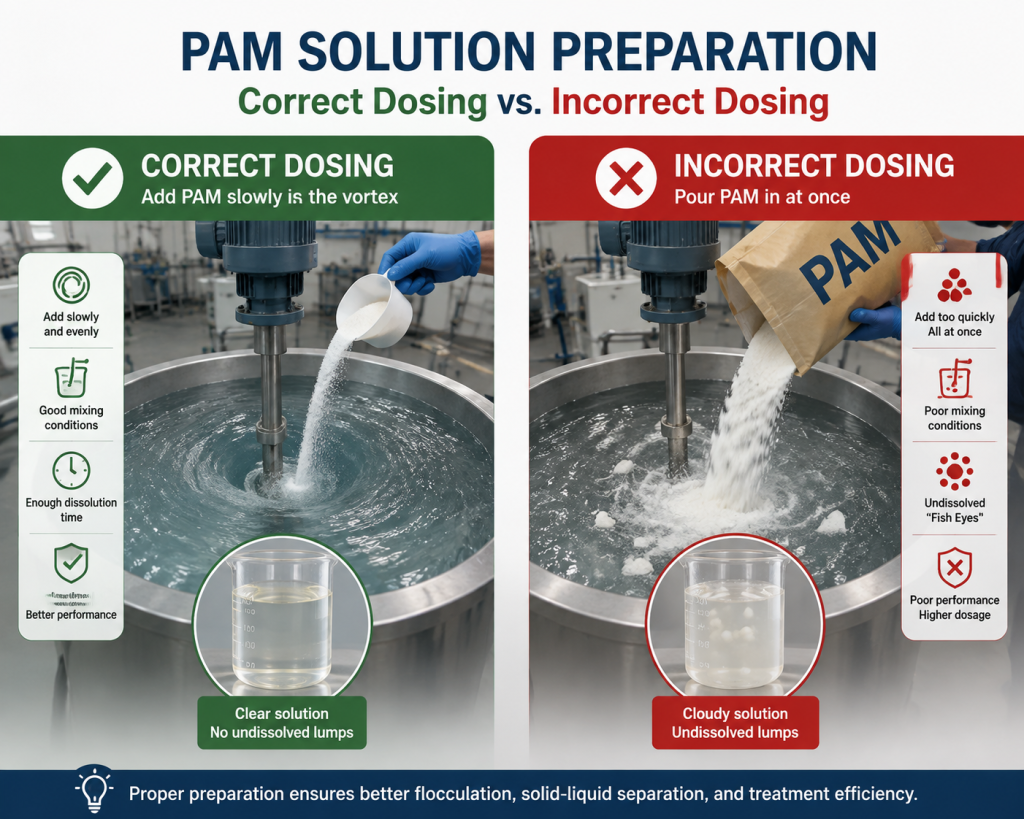
When preparing Polyacrylamide (PAM) solution, you may notice small gel-like lumps that do not dissolve completely. These are commonly called “fish eyes.”
They can reduce flocculation performance and affect wastewater treatment efficiency.
Main Causes of PAM Fish Eyes
🔹 Adding PAM too quickly
PAM particles absorb water rapidly and form a gel layer, preventing complete dissolution.
🔹 Insufficient mixing
Poor agitation causes PAM particles to stick together and create lumps.
🔹 Incorrect concentration
A solution that is too concentrated may dissolve slowly and unevenly.
🔹 Wrong PAM selection
Different wastewater requires different PAM types, such as anionic, cationic, or nonionic PAM.
How to Avoid PAM Fish Eyes
✅ Add PAM slowly and evenly
✅ Keep proper stirring during preparation
✅ Allow enough dissolution time
✅ Choose the right PAM type for your application
Proper PAM preparation helps achieve better flocculation, solid-liquid separation, and sludge dewatering performance.
Need the right PAM solution for your wastewater treatment? Contact us.