Company News
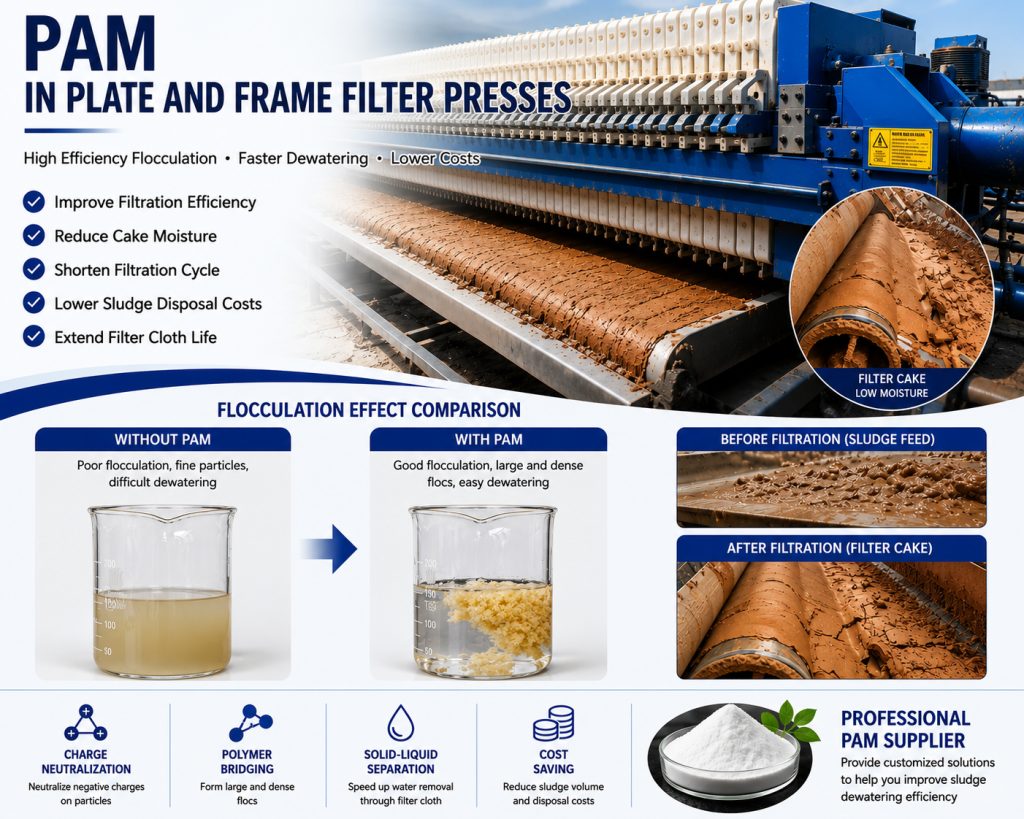
How Polyacrylamide (PAM) Helps Plate and Frame Filter Presses Produce Drier Sludge Cakes
Why Is Sludge Cake Moisture Important?
In sludge dewatering, the moisture content of the sludge cake directly affects disposal costs, transportation efficiency, and overall plant performance. A drier sludge cake means:
- Lower transportation costs
- Reduced disposal volume
- Improved filter press efficiency
- Shorter filtration cycles
- Lower operating costs
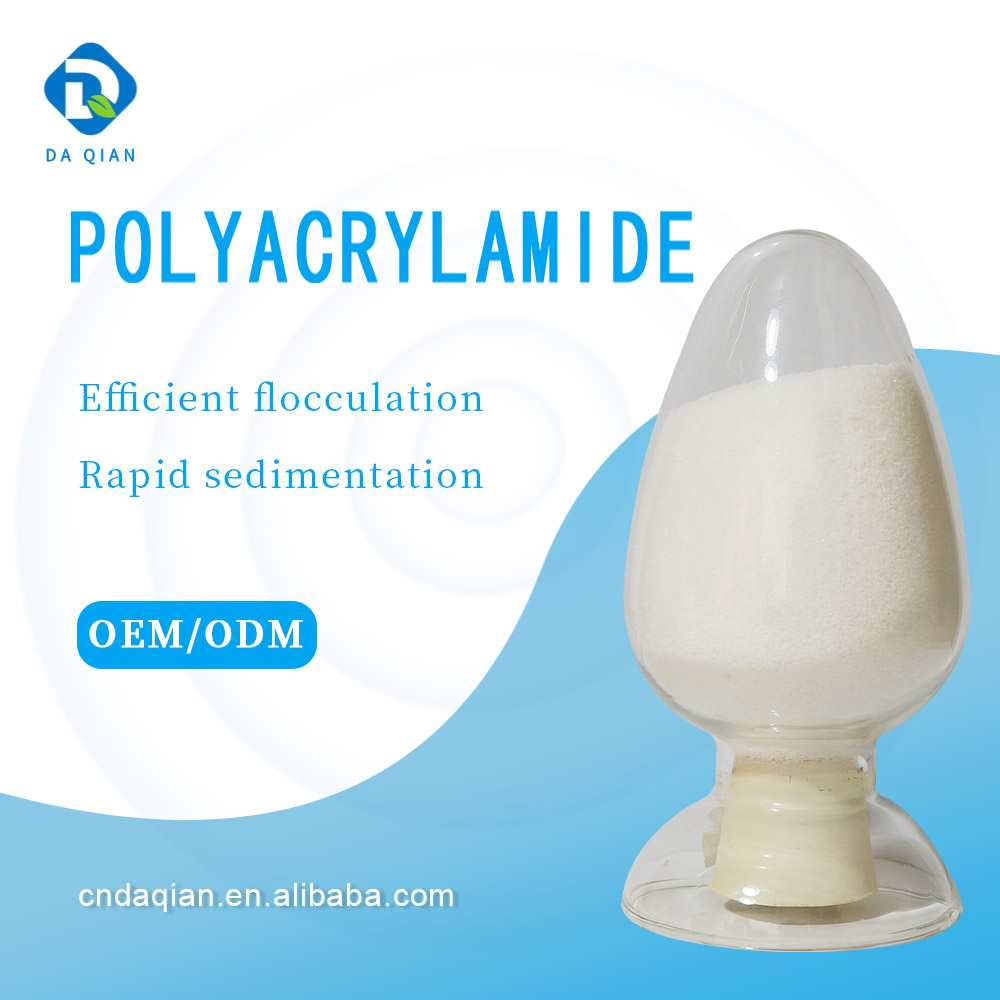
While the performance of a plate and frame filter press is important, the quality of sludge conditioning before filtration plays an even greater role. In most wastewater treatment systems, selecting the right Polyacrylamide (PAM) is one of the most effective ways to improve dewatering performance.
The Role of Polyacrylamide Before a Filter Press
Before sludge enters a plate and frame filter press, it is typically conditioned with Polyacrylamide (PAM).
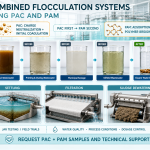
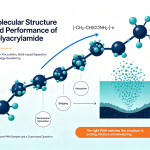
PAM works by binding fine suspended particles together into larger and stronger flocs. These larger flocs release water more easily under pressure, allowing the filter press to separate solids from water more efficiently.
When the correct PAM is selected, the filter press can produce:
- Larger and stronger flocs
- Faster filtration
- Lower sludge cake moisture
- Higher solids recovery
- Reduced polymer consumption
- Improved production efficiency
What Happens If the Wrong PAM Is Used?
Using an unsuitable Polyacrylamide can lead to several common problems:
- Sludge cakes remain wet and sticky.
- Filtration cycles become longer.
- Filter cloths clog more easily.
- More chemicals are consumed without improving results.
- The sludge cake breaks apart when discharged.
- Overall operating costs increase.
These issues are often caused by selecting the wrong ionic charge, molecular weight, or dosage rather than by the filter press itself.
Choosing the Right PAM for Your Sludge
Different wastewater produces sludge with different characteristics, so there is no universal Polyacrylamide suitable for every application.
Common industries include:
- Municipal wastewater treatment
- Paper mills
- Textile and dyeing plants
- Mining and mineral processing
- Sand washing plants
- Coal washing plants
- Chemical manufacturing
- Food processing industries
Depending on sludge characteristics, engineers may recommend cationic, anionic, or nonionic Polyacrylamide with different molecular weights and charge densities.
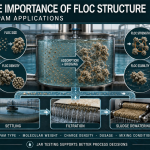
Laboratory jar testing is the most reliable method for determining the optimum product and dosage.
Benefits of Using the Correct Polyacrylamide
When the appropriate PAM is matched to your sludge, you can expect:
- Drier sludge cakes
- Faster dewatering cycles
- Improved filter press throughput
- Lower disposal and transportation costs
- Reduced chemical consumption
- Cleaner filtrate
- More stable operation
For many wastewater treatment plants, even a small reduction in sludge moisture can translate into significant annual savings in disposal and operating costs.
Practical Tips for Better Sludge Dewatering
To achieve the best performance from your plate and frame filter press:
- Select the appropriate PAM grade based on sludge characteristics.
- Prepare the polymer solution at the recommended concentration.
- Allow sufficient dissolution time before dosing.
- Avoid excessive mixing that can break flocs.
- Optimize the polymer dosage through laboratory testing.
- Clean filter cloths regularly to maintain filtration efficiency.
Proper sludge conditioning is just as important as maintaining the filter press itself.
Why Work With Us?
We specialize in manufacturing high-quality Polyacrylamide (PAM) for wastewater treatment and sludge dewatering.
Our technical team can help customers:
- Select the most suitable PAM grade
- Optimize chemical dosage
- Improve sludge cake dryness
- Increase filter press efficiency
- Reduce operating and disposal costs
Based on your wastewater sample and treatment process, we can recommend a customized solution to achieve better flocculation and more efficient sludge dewatering.
Conclusion
A plate and frame filter press can only perform at its best when the sludge has been properly conditioned. The right Polyacrylamide helps create stronger flocs, releases more water during filtration, and produces drier sludge cakes.
If your filter press is producing wet sludge cakes, running slowly, or consuming excessive chemicals, the issue may not be the equipment—it may be the polymer selection.
Contact us to discuss your wastewater conditions. Our engineers can recommend the most suitable Polyacrylamide solution to help you improve dewatering efficiency, reduce operating costs, and achieve consistently drier sludge cakes.