Company News
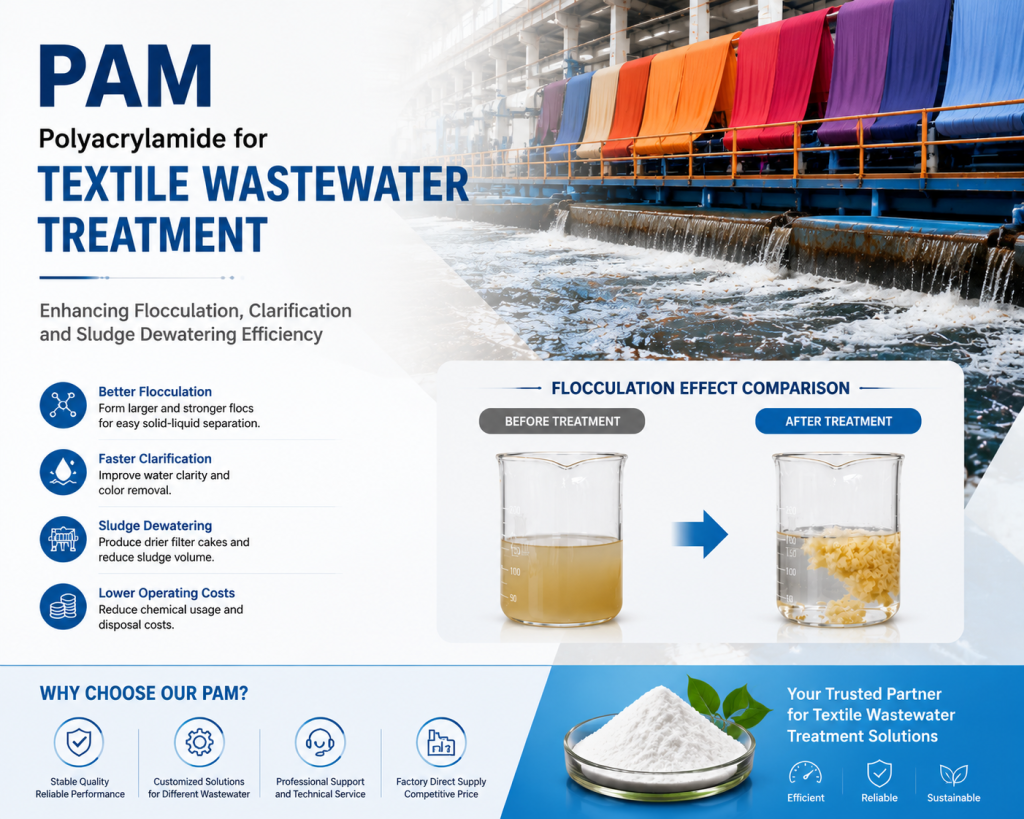
Polyacrylamide (PAM) for Textile Wastewater Treatment
Improving Flocculation and Sedimentation Efficiency in Textile Factories
The textile industry generates a large amount of wastewater during processes such as dyeing, printing, washing, and finishing. This wastewater usually contains dyes, fine suspended particles, organic substances, and other impurities, which can affect water quality and make treatment more challenging.
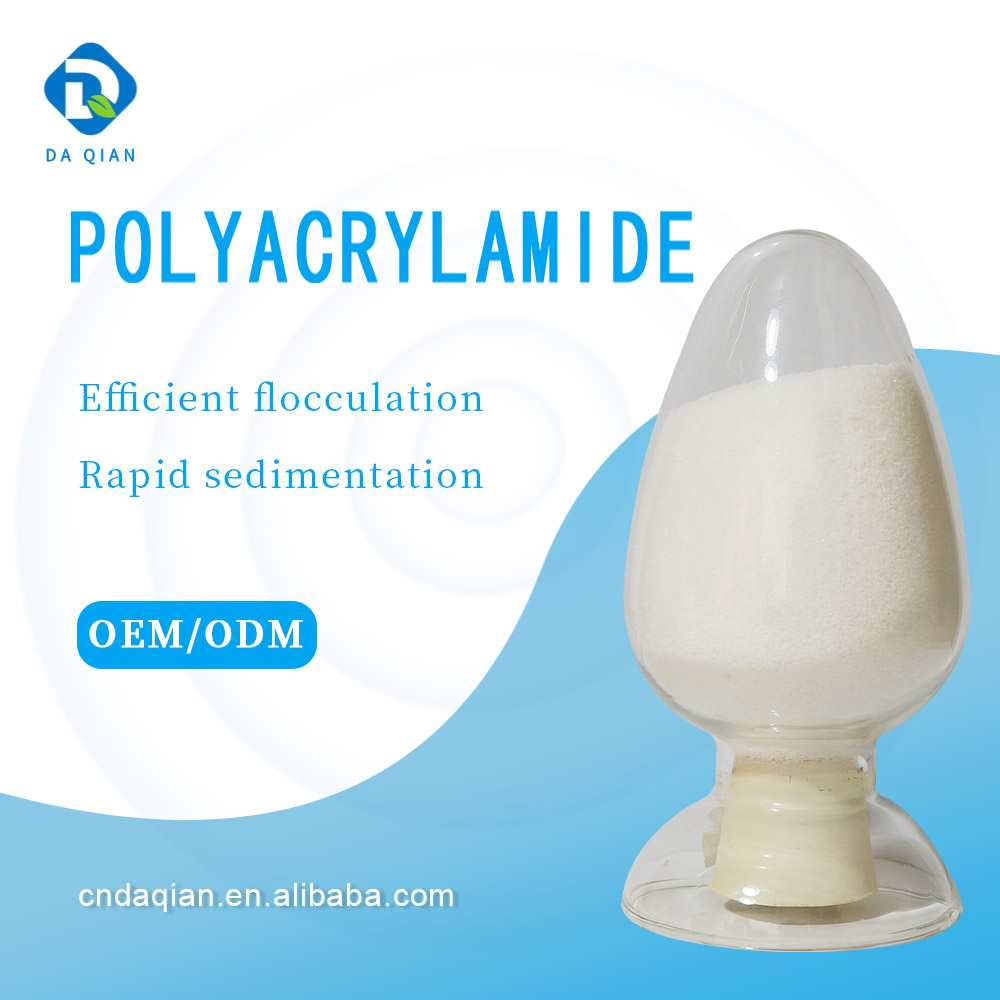
Polyacrylamide (PAM), as an efficient polymer flocculant, is widely used in textile wastewater treatment systems to improve flocculation, accelerate sedimentation, and enhance overall purification efficiency.
How Does PAM Work in Textile Wastewater Treatment?
Textile wastewater often contains tiny particles that are difficult to settle naturally. Due to their small size and stable dispersion, traditional sedimentation methods may not achieve the desired treatment effect.
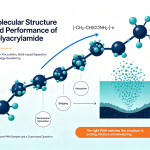
When polyacrylamide is added into wastewater, its long molecular chains can adsorb suspended particles and connect them together through a bridging effect. This process forms larger and stronger flocs, allowing suspended solids, dyes, and impurities to separate from water more effectively.
As a result, PAM helps improve water clarity and supports more efficient wastewater treatment operations.
Main Applications of PAM in Textile Wastewater
1. Enhanced Flocculation
PAM significantly improves the aggregation of fine particles in textile wastewater.
Benefits include:
- Formation of larger and denser flocs
- Faster separation of suspended solids
- Improved clarification performance
- Reduced wastewater turbidity
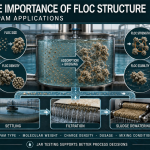
The stronger flocs produced by PAM can settle more quickly, improving the efficiency of sedimentation tanks and other treatment equipment.
2. Improved Color Removal
Dyeing and printing wastewater often contains residual dyes and colored substances.
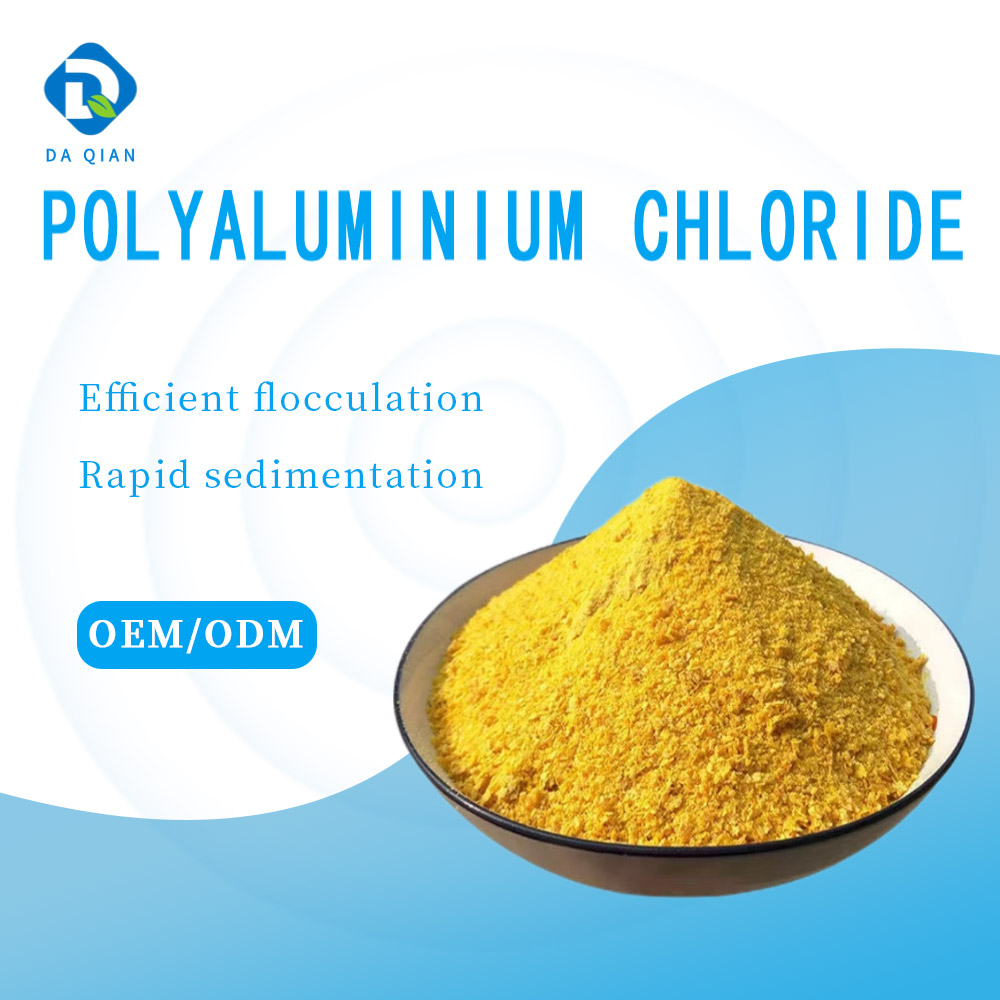
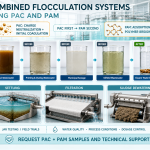
When combined with suitable coagulants such as PAC or ferric sulfate, PAM can enhance the removal of color particles by improving floc formation and separation.
This helps textile factories achieve better treated water quality and meet stricter discharge standards.
3. Stable Wastewater Treatment Performance
The characteristics of textile wastewater can vary depending on the production process, raw materials, and chemicals used.
The right PAM selection helps maintain stable treatment performance under different operating conditions, including:
- Better particle capture
- Faster settling speed
- Clearer treated water
- Lower chemical consumption
Choosing the Right Polyacrylamide for Textile Wastewater
Different textile wastewater conditions require different PAM grades.
Anionic Polyacrylamide (APAM) is commonly used for wastewater clarification due to its excellent adsorption and bridging ability.
Cationic Polyacrylamide (CPAM) may be selected for specific wastewater conditions where stronger charge neutralization is required.
The ideal PAM type, molecular weight, and dosage depend on factors such as wastewater composition, pH value, suspended solids concentration, and treatment process. Laboratory testing is recommended to determine the most suitable solution.
Why Choose Our Polyacrylamide?
Zhengzhou Daqian Environmental Protection Technology Co., Ltd. provides high-quality polyacrylamide solutions for textile wastewater treatment applications.
With stable product quality, customized specifications, and professional technical support, we help textile manufacturers improve flocculation efficiency, enhance sedimentation performance, and achieve more effective wastewater purification.
Conclusion
Polyacrylamide plays an important role in textile wastewater treatment by improving flocculation and sedimentation efficiency. With the correct product selection and application method, PAM can help textile factories achieve clearer water quality, more stable treatment performance, and more efficient wastewater management.