Company News
Why Is Tannery Wastewater Difficult to Treat? Key Challenges and Treatment Solutions
The leather tanning industry is an important source of industrial wastewater. During leather production, raw hides undergo several processing stages, including soaking, liming, unhairing, deliming, tanning, dyeing, and finishing. These processes involve various chemicals and auxiliaries, generating wastewater with complex pollutant characteristics.
Compared with many other types of industrial wastewater, tannery wastewater often contains high concentrations of organic pollutants, suspended solids, salts, and specific contaminants. Its composition can also vary significantly depending on the production process.
These characteristics make tannery wastewater treatment challenging and require appropriate chemical selection and treatment technologies.
So, why is tannery wastewater so difficult to treat? Let’s explore the main reasons.
1. Complex Pollutant Composition
Tannery wastewater contains a wide range of organic and inorganic pollutants generated during hide processing and chemical treatment.
Common pollutants include:
- Organic matter: Proteins, fats, residual hair, dyes, and other organic auxiliaries.
- Suspended solids (SS): Hide particles, hair, fibers, lime particles, and other solid impurities.
- High salt concentrations: Salts generated during pickling and tanning processes.
- Sulfides: Mainly originating from sulfur-containing chemicals used in unhairing and liming.
- Chromium and other metals: Certain chrome-tanning processes generate chromium-containing wastewater that requires specific treatment.
Because these pollutants have different chemical properties, a single treatment method is often insufficient to achieve the required effluent quality.
2. High COD and Organic Pollution Loads
Leather processing involves various chemicals, including protein-processing agents, degreasing agents, dyes, tanning agents, and other chemical auxiliaries.
When these substances enter wastewater, they can contribute to high Chemical Oxygen Demand (COD).
Some organic pollutants may also have relatively low biodegradability, increasing the operating pressure on biological treatment systems.
Therefore, tannery wastewater treatment commonly requires a combination of physicochemical and biological processes to reduce pollution loads and improve overall treatment performance.
3. High Suspended Solids and Difficult Particle Separation
Tannery wastewater may contain large amounts of hide particles, hair, lime particles, and other fine suspended solids.
Some particles are extremely small and can remain dispersed in water as colloidal substances, making natural sedimentation less effective.
This increases the difficulty of sedimentation and solid-liquid separation.
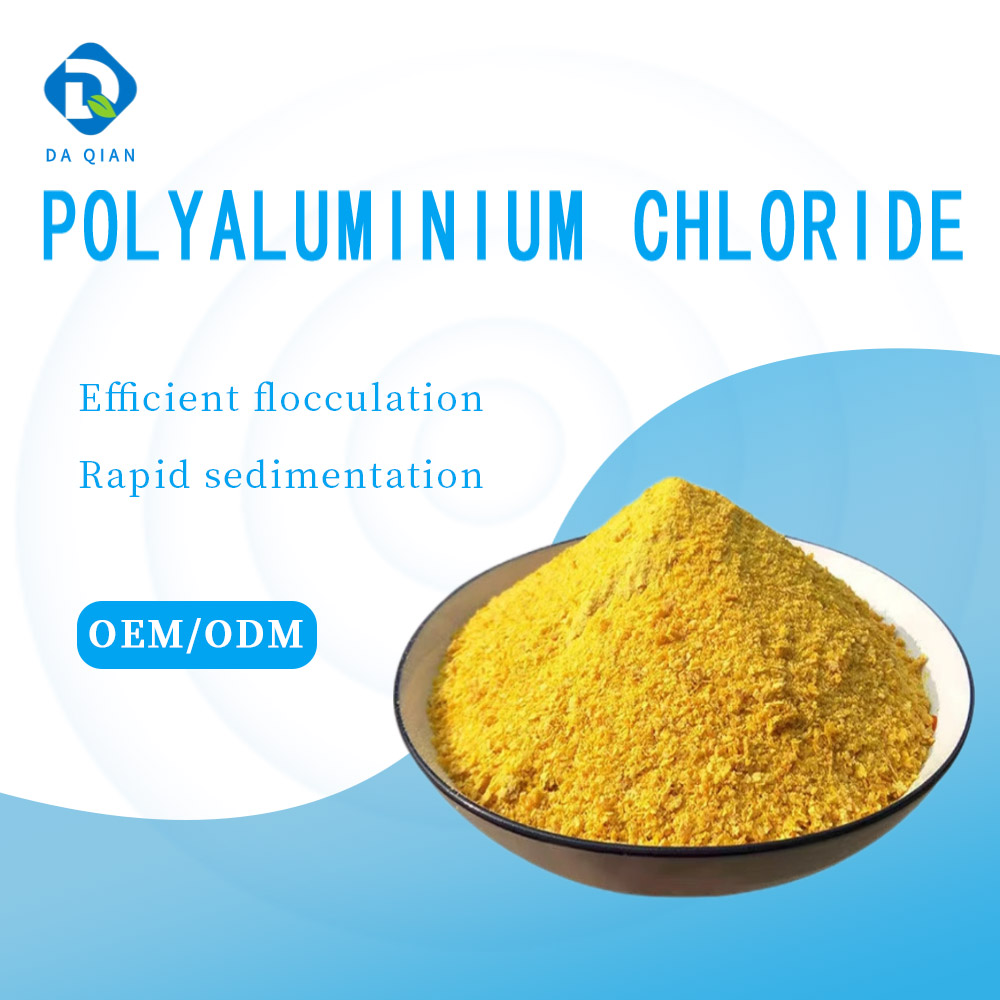
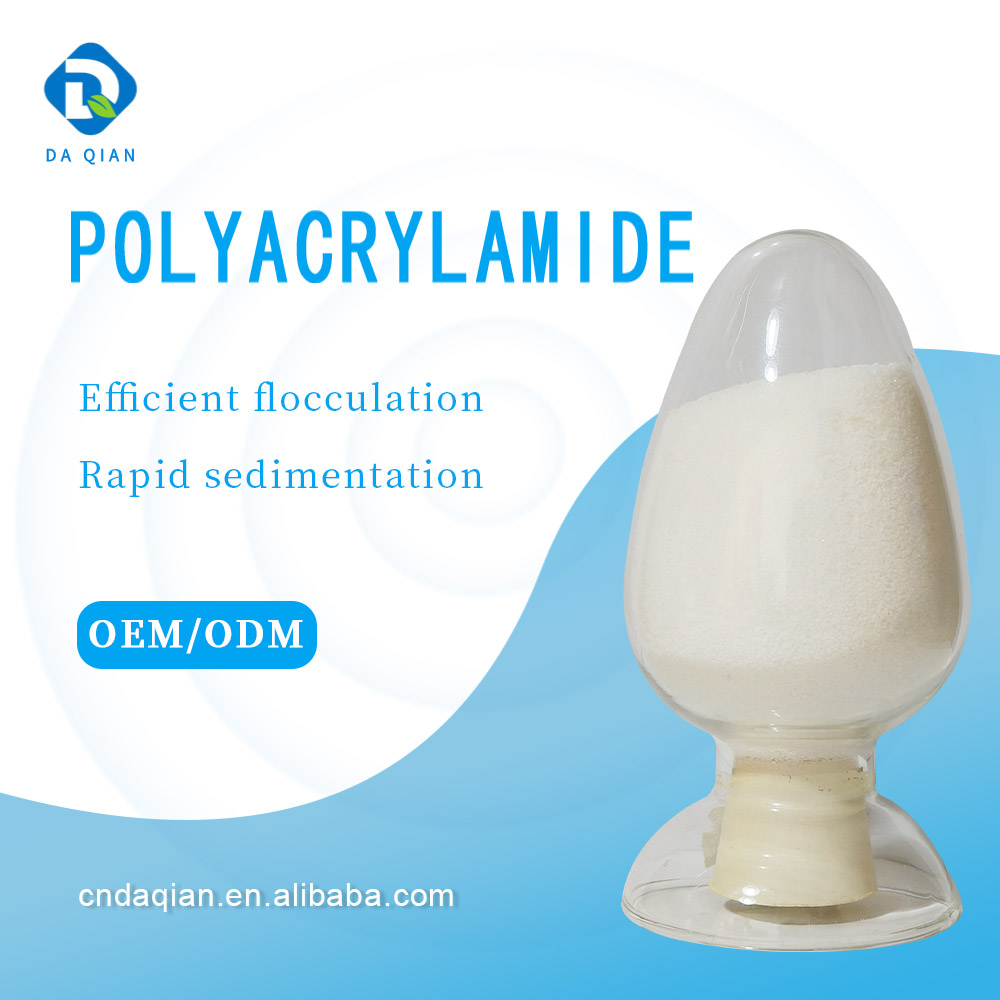
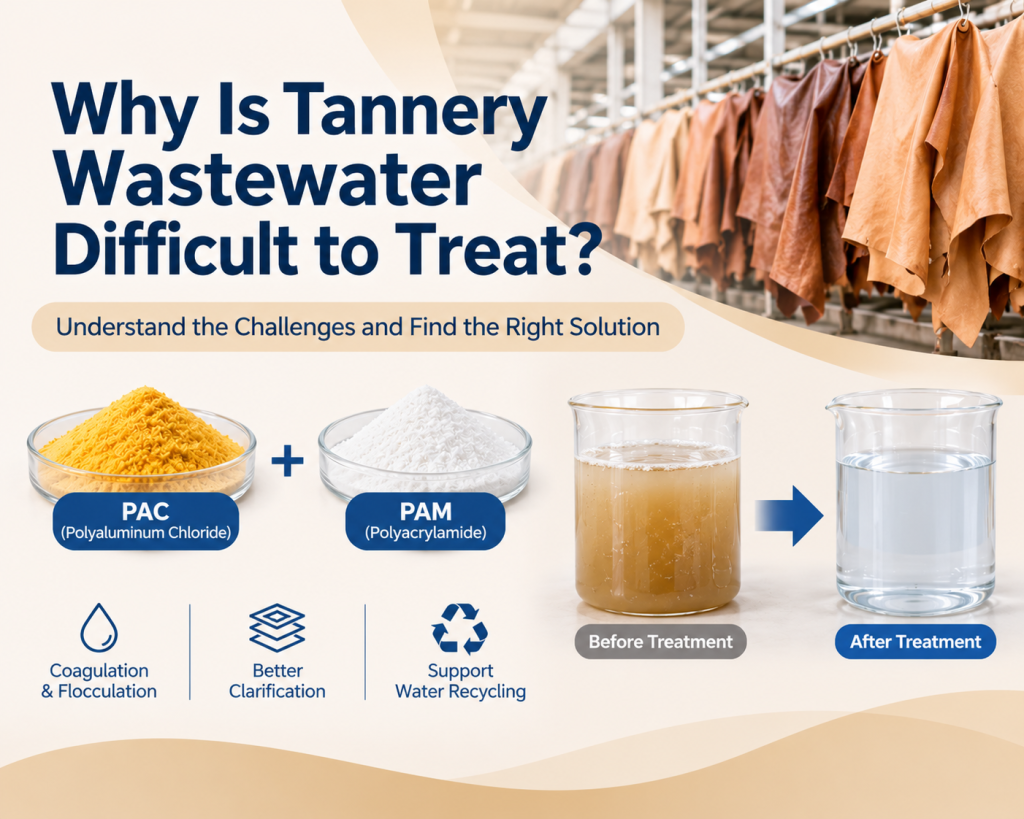
Under suitable conditions, PAC (Polyaluminum Chloride) and PAM (Polyacrylamide) can help promote particle aggregation and form larger flocs that are easier to separate.
4. Significant Variations in Wastewater Quality
Leather manufacturing involves multiple processing stages, and wastewater from different stages can have significantly different characteristics.
For example:
- Unhairing wastewater may contain high concentrations of sulfides and organic pollutants.
- Liming wastewater often has high alkalinity and suspended solids.
- Tanning wastewater may contain chromium salts and other inorganic contaminants.
- Dyeing wastewater may contain dyes and relatively difficult-to-degrade organic compounds.
Wastewater quality can also fluctuate between production batches and discharge periods, making it difficult to maintain stable chemical dosing and treatment performance.
Therefore, separate wastewater collection, equalization, and process-specific treatment are important for improving treatment stability.
5. High Salinity and Specific Contaminants
Some tanning processes generate wastewater with high salt concentrations.
Excessive salinity may affect microbial activity in biological treatment systems and increase the difficulty of maintaining stable biological performance.
In addition, sulfide-containing and chromium-containing wastewater require specific treatment measures based on their chemical properties.
Sulfide wastewater requires careful pH control and safety management to prevent the formation and release of toxic hydrogen sulfide gas under inappropriate operating conditions.
Chromium-containing wastewater commonly requires dedicated chemical reduction and precipitation processes. Ordinary coagulation and flocculation alone are not sufficient for complete chromium removal.
6. How Can PAC and PAM Help Treat Tannery Wastewater?
PAC and PAM are commonly used chemicals in industrial wastewater coagulation and flocculation. They perform complementary functions in the treatment process.
PAC (Polyaluminum Chloride) – Primary Coagulation
PAC helps destabilize colloidal particles through charge neutralization, adsorption, and sweep flocculation. This promotes the aggregation of fine suspended particles and the formation of initial flocs.
PAM (Polyacrylamide) – Enhanced Flocculation
PAM mainly works through polymer adsorption and bridging. It connects smaller particles and initial flocs, promoting the formation of larger flocs that are easier to separate.
Combined PAC and PAM Application
Under suitable wastewater conditions and dosing strategies, the combined use of PAC and PAM may help:
- Promote the aggregation of fine suspended particles.
- Improve wastewater turbidity and effluent clarity.
- Enhance floc formation and settling performance.
- Support downstream sedimentation, dissolved air flotation (DAF), and solid-liquid separation.
- Optimize chemical dosing strategies and help control wastewater treatment costs.
It is important to understand that PAC and PAM primarily support coagulation, flocculation, and particle separation. They cannot independently remove all dissolved organic pollutants, salts, sulfides, or chromium. Additional treatment processes may be required depending on wastewater characteristics.
7. How to Improve Tannery Wastewater Treatment Performance
To achieve more stable treatment results, several key factors should be considered:
- Analyze wastewater quality: Test pH, COD, SS, turbidity, salinity, sulfides, chromium, and other relevant parameters.
- Separate wastewater streams: Arrange appropriate pretreatment according to the characteristics of wastewater from different production stages.
- Select suitable chemicals: Choose the appropriate PAC grade and PAM type, including anionic, cationic, or non-ionic PAM, according to wastewater characteristics.
- Optimize dosing conditions: Control chemical dosage, dosing sequence, mixing intensity, and reaction time.
- Conduct Jar Tests: Compare different PAC and PAM grades and dosages to identify a suitable treatment combination.
- Integrate downstream treatment: Depending on effluent requirements, consider biological treatment, chemical precipitation, or advanced treatment processes.
Conclusion
Tannery wastewater is difficult to treat mainly because of its complex pollutant composition, high COD and suspended solids, fluctuating wastewater quality, and the possible presence of high salinity, sulfides, and chromium.
Effective treatment requires a process tailored to the characteristics of different leather production stages.
PAC (Polyaluminum Chloride) and PAM (Polyacrylamide) can serve as important chemicals in physicochemical pretreatment, helping promote particle aggregation, improve flocculation, and enhance solid-liquid separation.
📩 Looking for PAC and PAM for tannery wastewater treatment?
Contact us for product information, sample use support, technical guidance, and free quotations. We can help you identify suitable products based on your wastewater characteristics and treatment requirements.