Company News
Paper Mill Wastewater Treatment: A PAC and PAM Flocculation Case Study
Wastewater is generated during various stages of papermaking, including pulping, paper forming, equipment cleaning, and production operations.
Paper mill wastewater commonly contains fine fibers, fillers, suspended solids, and organic pollutants. Its characteristics can vary significantly depending on the raw materials, production processes, and paper products.
Removing suspended solids and fine fibers, improving effluent quality, and supporting water recycling are important objectives in paper mill wastewater treatment.
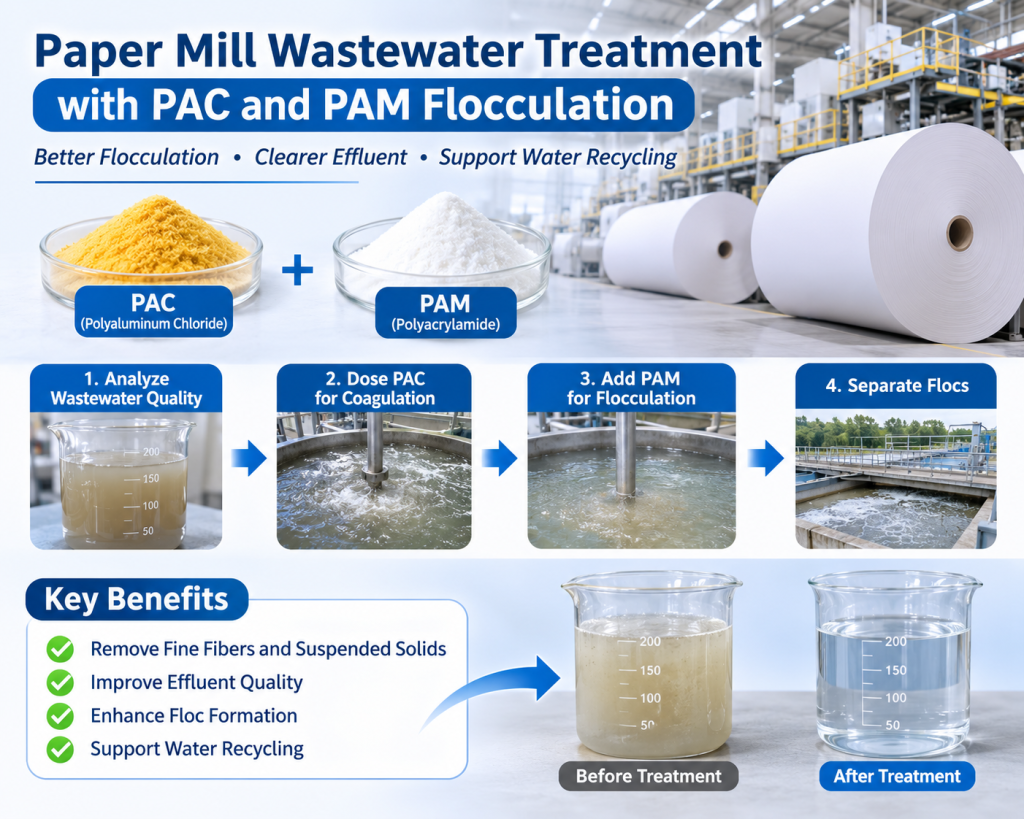
In suitable treatment processes, the combined application of PAC (Polyaluminum Chloride) and PAM (Polyacrylamide) can promote particle aggregation, improve flocculation, and support downstream solid-liquid separation.
1. Project Background: Challenges in Paper Mill Wastewater Treatment
Paper mill wastewater characteristics depend on the raw materials, manufacturing processes, and types of paper products.
Common treatment challenges include:
- High suspended solids: Wastewater may contain fine pulp fibers, fillers, and other suspended particles.
- Difficult particle settling: Some fibers and colloidal particles are too small to settle effectively through natural sedimentation.
- Complex organic pollutants: Wastewater may contain starch, adhesives, and other organic substances.
- Fluctuating water quality: Different production processes and discharge periods can cause variations in wastewater characteristics.
These factors can increase treatment complexity, making proper coagulant and flocculant selection important.
2. How PAC and PAM Work Together
PAC and PAM perform complementary functions in paper mill wastewater treatment.
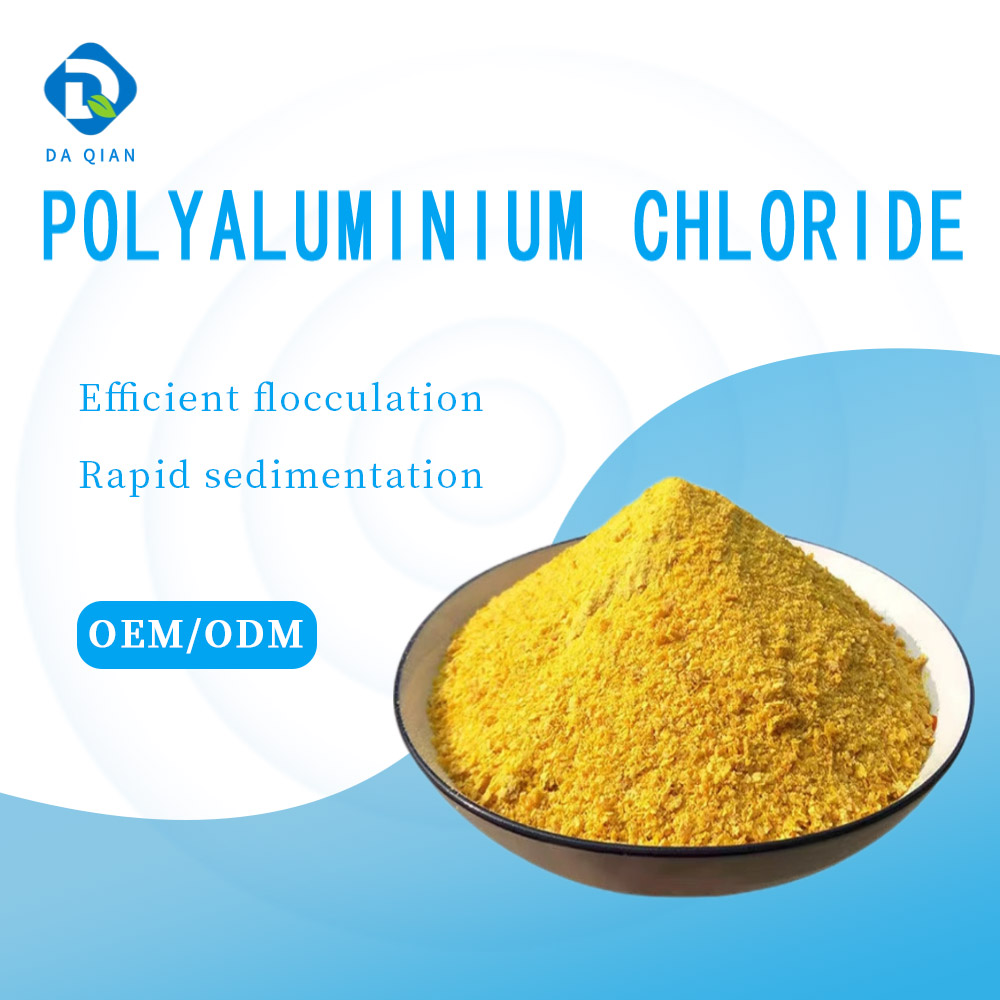
PAC (Polyaluminum Chloride) – Primary Coagulation
PAC helps destabilize colloidal particles through charge neutralization, adsorption, and sweep flocculation. This encourages fine fibers, fillers, and suspended particles to aggregate.
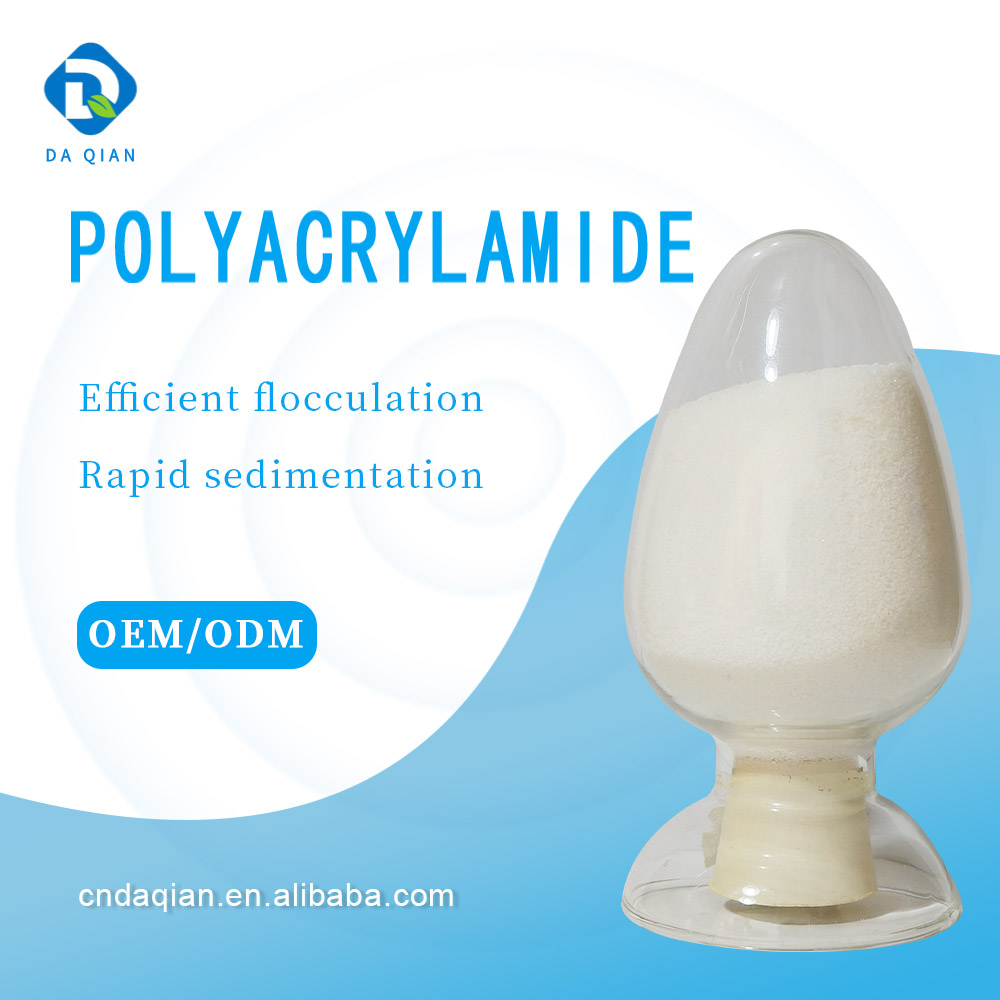
PAM (Polyacrylamide) – Enhanced Flocculation
PAM mainly works through polymer adsorption and bridging. It connects smaller particles formed during primary coagulation and helps develop larger flocs for subsequent sedimentation, flotation, or filtration.
Combined PAC and PAM Application
PAC supports primary coagulation, while PAM promotes further floc growth and aggregation. When properly selected and dosed, the two chemicals can improve flocculation and separation performance.
3. Typical Treatment Process
The following steps can be used as a starting point for chemical selection and process optimization.
Step 1: Wastewater Quality Analysis
Analyze key parameters such as pH, suspended solids (SS), COD, turbidity, and other relevant indicators to understand wastewater characteristics and discharge or reuse requirements.
Step 2: PAC Dosing and Coagulation
Select an appropriate PAC grade and dosage based on wastewater quality. Proper mixing helps destabilize colloidal particles and promotes initial aggregation.
Step 3: PAM Dosing and Flocculation
Add a suitable PAM grade under appropriate reaction conditions. PAM helps combine fine fibers and suspended particles into larger flocs, supporting improved sedimentation or flotation.
Step 4: Solid-Liquid Separation and Performance Evaluation
Separate the formed flocs using sedimentation tanks, dissolved air flotation (DAF) systems, or other suitable equipment. Evaluate effluent turbidity, suspended solids, floc size, and sludge characteristics.
4. Potential Benefits of Combined PAC and PAM Treatment
Depending on wastewater characteristics and treatment conditions, the combined use of PAC and PAM may help:
- Promote the aggregation of fine fibers and filler particles.
- Improve suspended solids removal and water clarification.
- Strengthen floc formation and solid-liquid separation.
- Support downstream sedimentation, flotation, and filtration.
- Optimize chemical dosing strategies and wastewater treatment operating costs.
For paper mills with water recycling requirements, PAC and PAM can also be considered as part of the pretreatment process before further treatment.
It is important to note that PAC and PAM primarily support coagulation, flocculation, and particle separation. They do not independently remove all dissolved organic pollutants. Wastewater with high COD or difficult-to-degrade organic compounds may require additional biological or advanced treatment processes.
5. Key Factors Affecting Treatment Performance
The actual performance of PAC and PAM depends on several factors:
- PAC grade and dosage: Selection should consider wastewater characteristics and pH.
- PAM type: Anionic, cationic, or non-ionic PAM should be selected according to particle properties and process conditions.
- Chemical dosing sequence: Dosing locations and intervals should be properly arranged.
- Mixing and reaction conditions: Mixing intensity and reaction time influence floc formation.
- Wastewater composition: Fiber content, filler types, and organic matter composition can all affect chemical performance.
Before full-scale application, we recommend conducting a Jar Test to compare different PAC and PAM grades and dosages, helping identify a suitable treatment solution for the specific paper mill wastewater.
Conclusion
Paper mill wastewater treatment requires a process tailored to production methods, wastewater composition, and final discharge or reuse requirements.
Combined PAC and PAM flocculation can be a useful option for pretreatment and suspended solids removal in paper mill wastewater treatment. Proper product selection, laboratory testing, and on-site process optimization can help improve flocculation, enhance solid-liquid separation, and support more stable wastewater treatment operations.
📩 Looking for PAC (Polyaluminum Chloride) and PAM (Polyacrylamide) for paper mill wastewater treatment? Contact us for product information, sample use support, and technical recommendations tailored to your application.