Company News
Application of Polyacrylamide (PAM) in Ceramic Wastewater Treatment
Improve Ceramic Wastewater Treatment Efficiency with the Right PAM Solution
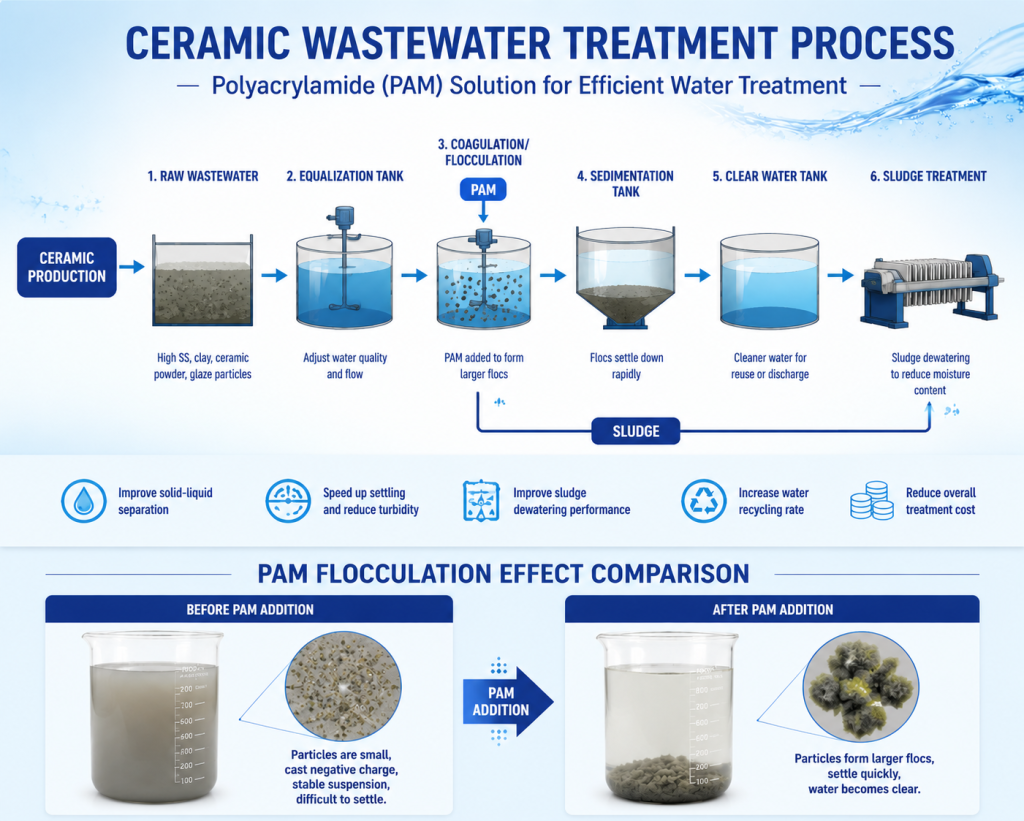
Ceramic manufacturing produces a large amount of wastewater containing fine suspended solids such as clay, quartz, ceramic powder, and glaze particles. Due to their small size and slow settling speed, these particles are difficult to remove by natural sedimentation.
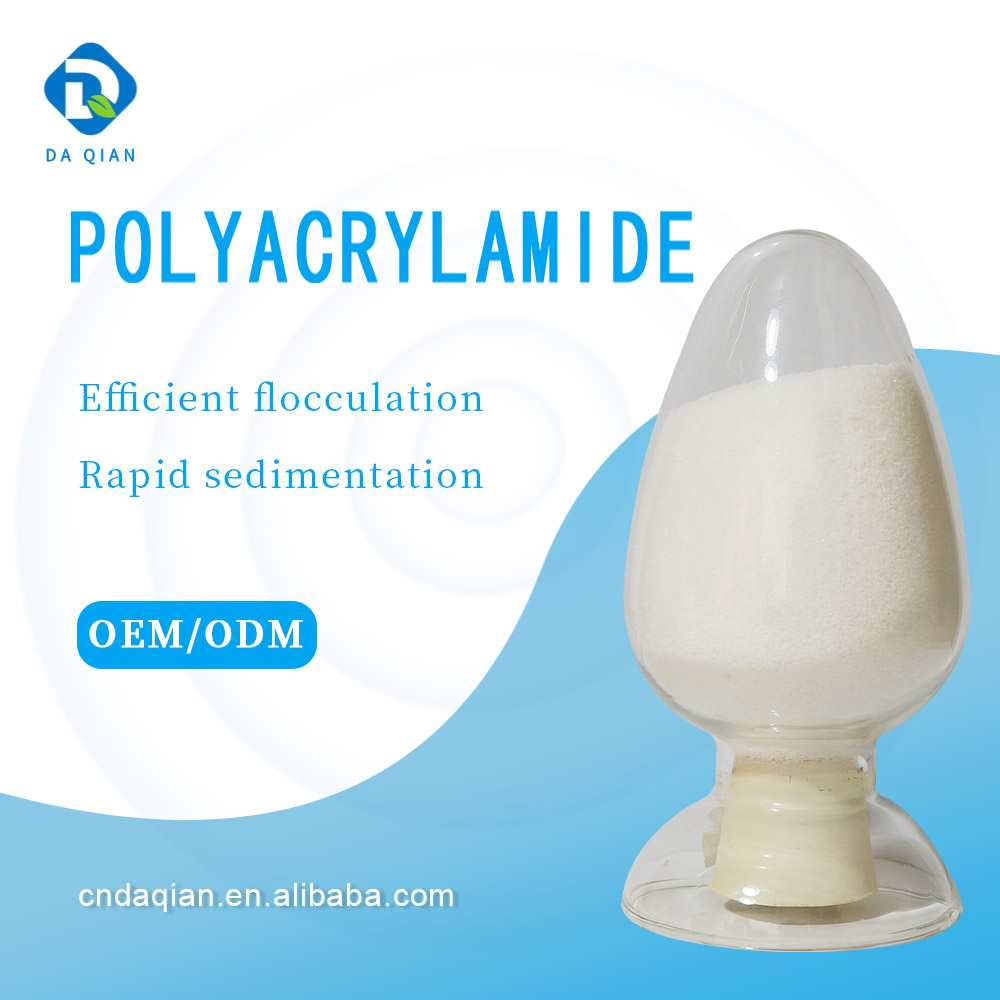
Polyacrylamide (PAM), as an efficient flocculant, helps ceramic wastewater treatment by adsorbing and bridging suspended particles, forming larger flocs and improving solid-liquid separation efficiency.
Main Roles of PAM in Ceramic Wastewater Treatment
1. Accelerate Solid Settling
The long molecular chains of PAM capture fine ceramic particles and combine them into larger flocs, improving settling performance and reducing water turbidity.
2. Improve Sludge Dewatering
PAM promotes the formation of compact sludge flocs, improving dewatering efficiency and reducing sludge treatment costs.
3. Enhance Water Recycling
By reducing suspended solids (SS) and ceramic powder content, PAM helps ceramic manufacturers improve wastewater reuse and achieve cleaner production.
How to Choose the Right PAM?
Different ceramic wastewater conditions require different PAM grades.
Generally:
- Anionic Polyacrylamide (APAM): Widely used for ceramic wastewater treatment due to its excellent flocculation performance.
- Cationic Polyacrylamide (CPAM): Mainly used for sludge conditioning and dewatering.
The suitable PAM type should be selected according to wastewater characteristics, pH value, suspended solids concentration, and treatment process.
Conclusion
Polyacrylamide (PAM) plays an important role in ceramic wastewater treatment. With effective flocculation performance, PAM helps ceramic manufacturers improve solid-liquid separation efficiency, reduce treatment costs, and increase wastewater recycling efficiency.
Zhengzhou Daqian Environmental Protection Technology Co., Ltd. provides customized Polyacrylamide solutions for different industrial wastewater applications.