Company News
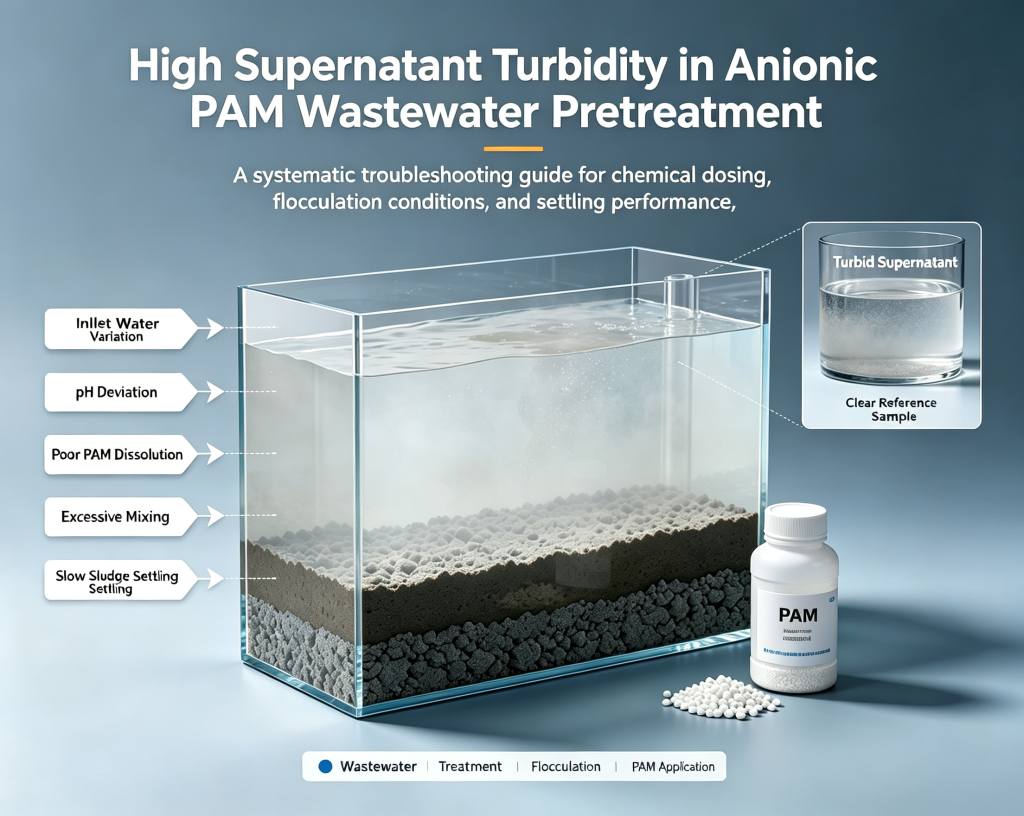
Troubleshooting High Supernatant Turbidity When Using Anionic PAM
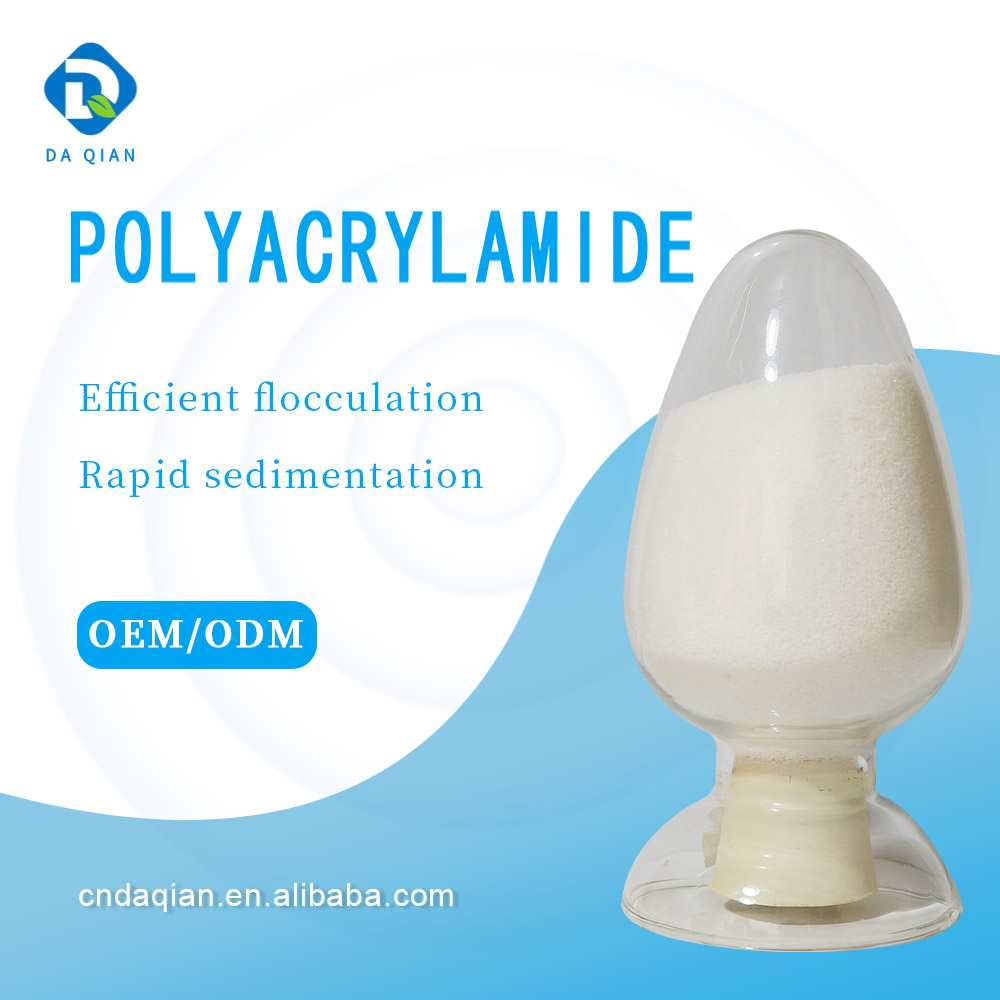
Anionic Polyacrylamide (Anionic PAM) is widely used in wastewater treatment as an effective flocculant. Through adsorption and bridging, PAM helps suspended particles form larger flocs for better settling and solid-liquid separation.
However, some users may experience:
“Flocs are formed after adding PAM, but why is the supernatant still cloudy?”
Common reasons include:
1. Incorrect PAM Grade Selection
Different wastewater requires different PAM grades.
If the molecular weight, charge density, or PAM type does not match the wastewater, it may cause:
- Small flocs
- Slow settling
- Poor suspended solids removal
Choosing the right PAM grade is essential for effective treatment.
2. Improper PAM Dosage
More PAM does not always mean better results.
- Too little PAM: insufficient particle bridging;
- Too much PAM: unstable flocs and reduced settling performance.
A Jar Test is recommended to determine the optimal dosage.
3. Poor PAM Dissolution
Insufficient dissolution can prevent PAM molecules from fully expanding and reduce flocculation performance.
Proper solution preparation, mixing, and aging time are important.
4. Improper Mixing Conditions
Excessive mixing can break formed flocs, while insufficient mixing may reduce contact between PAM and suspended particles.
Optimizing mixing and settling conditions can improve supernatant clarity.
5. Changes in Wastewater Quality
Changes in pH, suspended solids concentration, or particle characteristics can affect PAM performance.
If turbidity suddenly increases, check whether the wastewater conditions have changed.
How to Improve Supernatant Clarity?
✅ Select the right PAM grade
✅ Optimize PAM dosage
✅ Ensure proper dissolution
✅ Adjust mixing and settling conditions
✅ Conduct regular Jar Tests
Effective PAM performance depends not only on product quality, but also on correct selection and application.
As a professional PAM supplier, we provide suitable Anionic Polyacrylamide solutions based on different wastewater characteristics and treatment requirements.