Company News
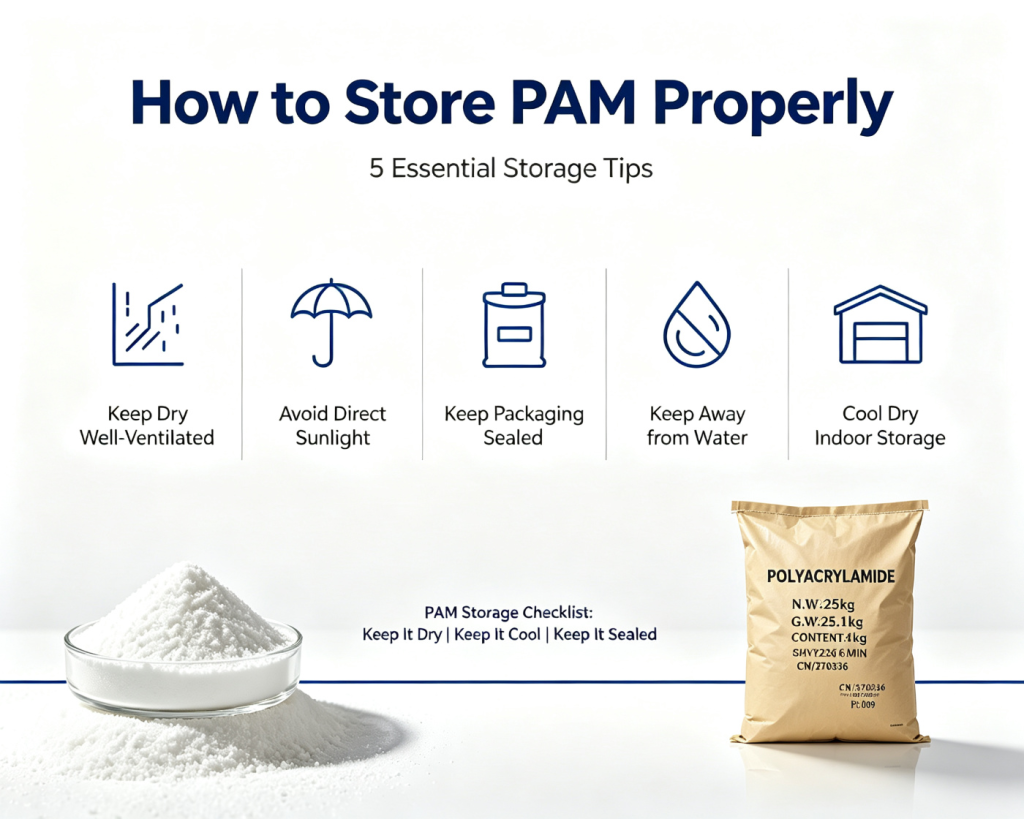
How to Store Polyacrylamide (PAM) Properly?
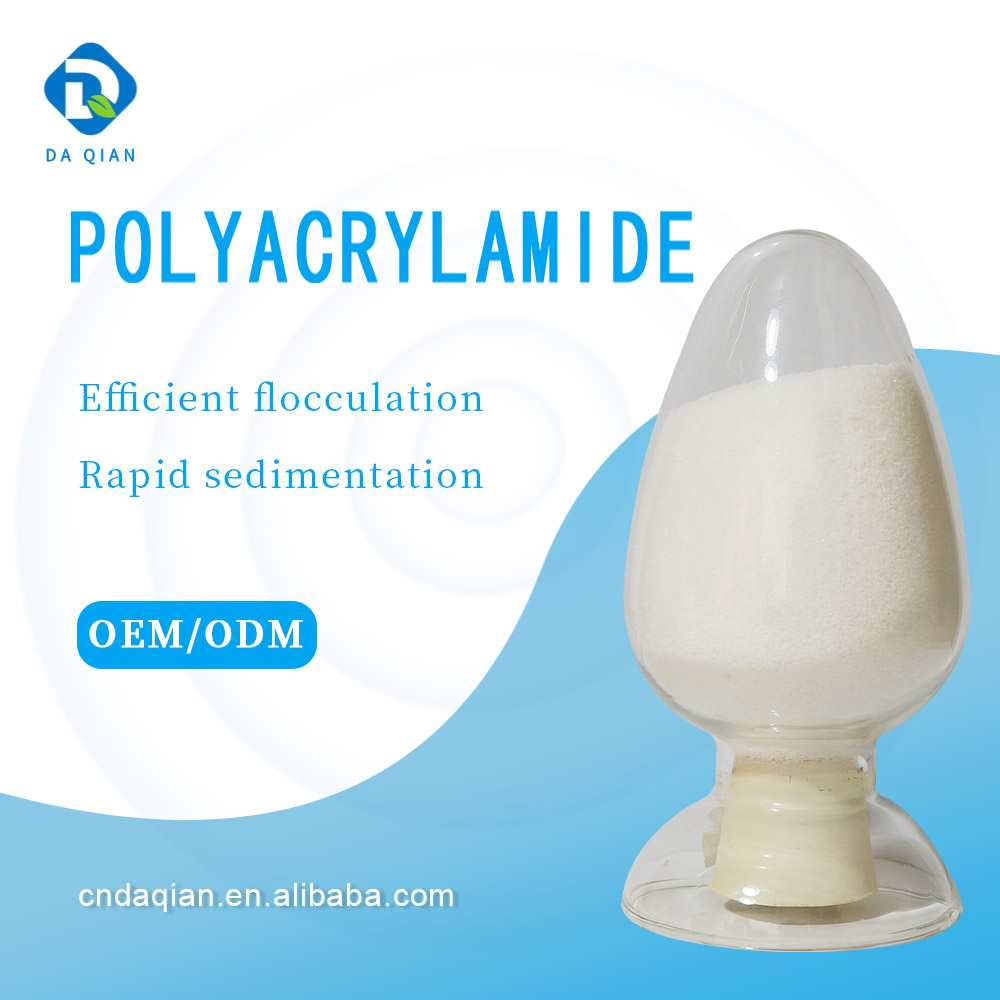
Polyacrylamide (PAM) is widely used as a flocculant in wastewater treatment, sludge dewatering, mining, papermaking, and many other industries.
Proper storage is important to maintain PAM’s product quality, solubility, and flocculation performance.
So, how should PAM be stored?
1. Keep PAM Dry
PAM is moisture-sensitive and should be stored in a dry and well-ventilated environment.
Exposure to moisture can cause the powder to absorb water and form lumps, making it more difficult to dissolve and use.
Once the package is opened, reseal it properly and avoid prolonged exposure to air.
2. Avoid Direct Sunlight
Store PAM in a cool place away from direct sunlight and excessive heat.
Indoor storage is recommended to help maintain product stability.
3. Keep the Packaging Sealed
Keep unused PAM in its original sealed packaging whenever possible.
If the package has been opened or damaged, it should be properly resealed to prevent moisture from entering.
4. Keep Away from Water
Direct contact with water can cause PAM powder to form lumps.
During storage and handling:
- Keep PAM away from wet floors
- Avoid contact with water
- Protect it from rain
- Keep the packaging intact
- Use pallets to keep bags off the floor when possible
5. Choose the Right Storage Environment
PAM should ideally be stored in a cool, dry, and well-ventilated indoor area, away from excessive humidity and extreme temperatures.
For inventory management, the FIFO (First In, First Out) principle is recommended to avoid unnecessary long-term storage.
PAM Storage Checklist
Keep It Dry | Keep It Cool | Keep It Sealed
In short:
✅ Keep PAM dry
✅ Avoid direct sunlight
✅ Keep the packaging sealed
✅ Prevent contact with water
✅ Store in a cool and ventilated place
✅ Avoid unnecessary long-term storage
Proper storage helps maintain PAM’s solubility and flocculation performance before use.
📩 Have questions about PAM storage, packaging, or application? Contact us for professional advice.