Company News
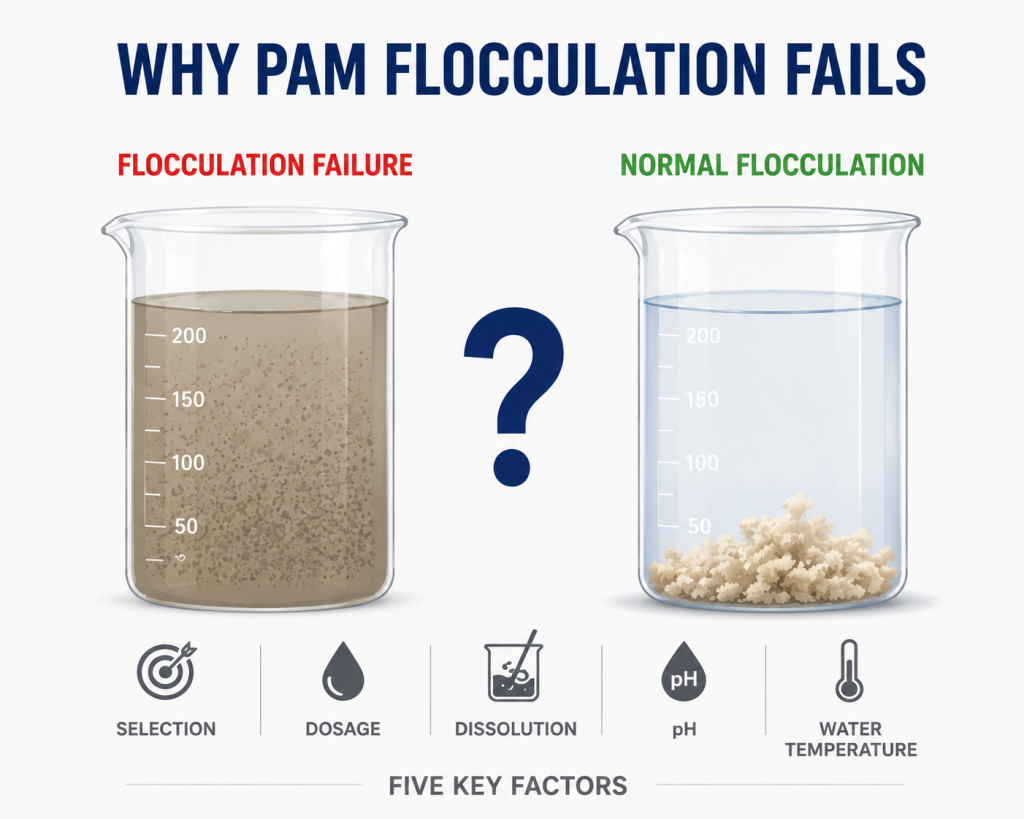
Why Is PAM Not Flocculating? Common Causes & Solutions
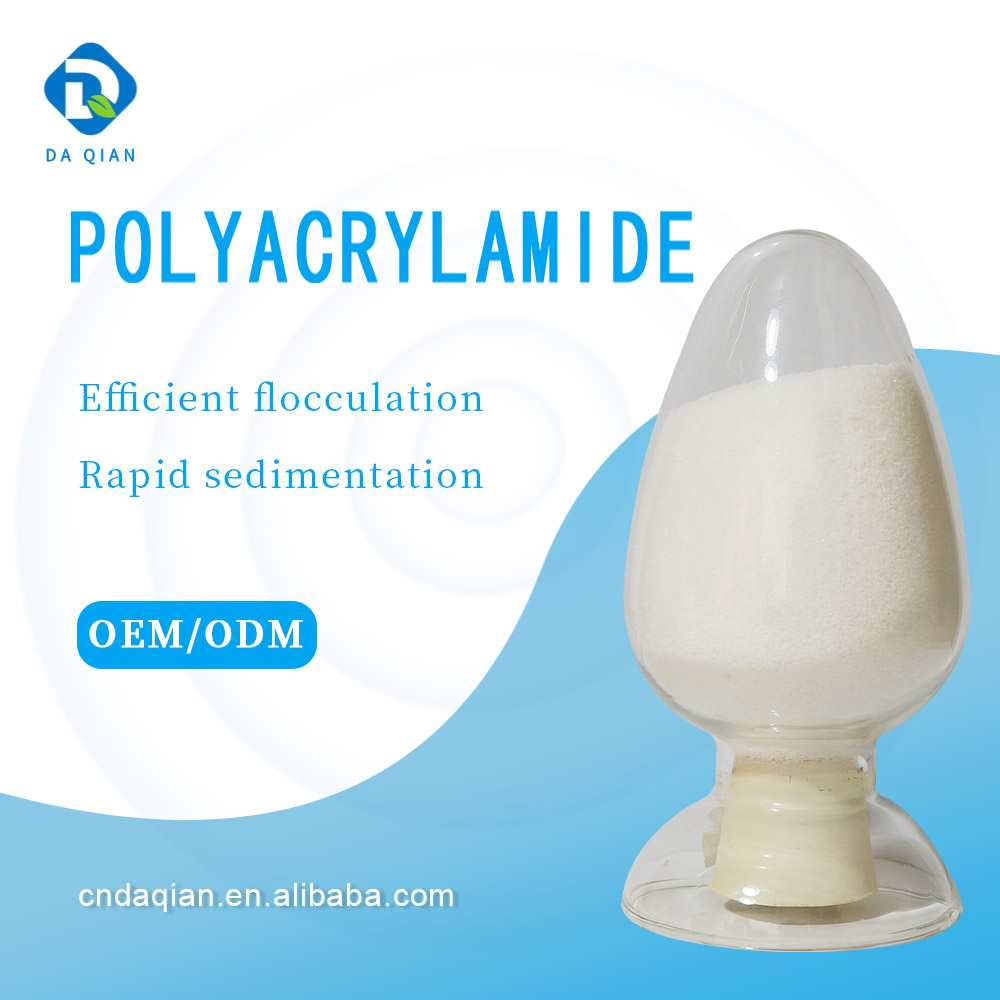
PAM (Polyacrylamide) is widely used as a polymer flocculant in wastewater treatment and sludge dewatering. But sometimes users face a common problem:
“Why does PAM not produce good flocculation?”
Several factors may be responsible:
1. Wrong PAM Grade
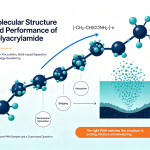
Different wastewater requires different PAM types, including anionic, cationic, and non-ionic PAM. If the molecular weight, charge density, or PAM type does not match the water quality, flocculation may be poor.
2. Incorrect Dosage
More PAM does not always mean better results.
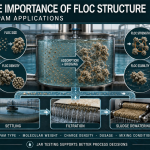
Too little may result in weak flocculation, while too much can also negatively affect floc formation. A Jar Test is recommended to determine the optimal dosage.
3. Poor Dissolution
PAM should be properly dissolved before application. Incomplete dissolution can reduce its effectiveness and result in unstable flocculation.
4. Improper Mixing
Excessive mixing can break formed flocs, while insufficient mixing may prevent PAM from contacting suspended particles effectively.
5. Changes in Water Quality
Changes in pH, temperature, suspended solids, and pollutant characteristics can all affect PAM performance.
How to Improve PAM Flocculation?
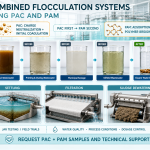
✅ Choose the right PAM grade
✅ Optimize molecular weight and charge density
✅ Adjust the dosage
✅ Ensure proper dissolution
✅ Optimize mixing conditions
✅ Conduct a Jar Test
Good PAM performance depends on more than the product itself—it requires the right product, the right dosage, and the right application method.
If you are experiencing small flocs, slow settling, or poor flocculation, contact us for professional PAM selection and application advice.