Company News
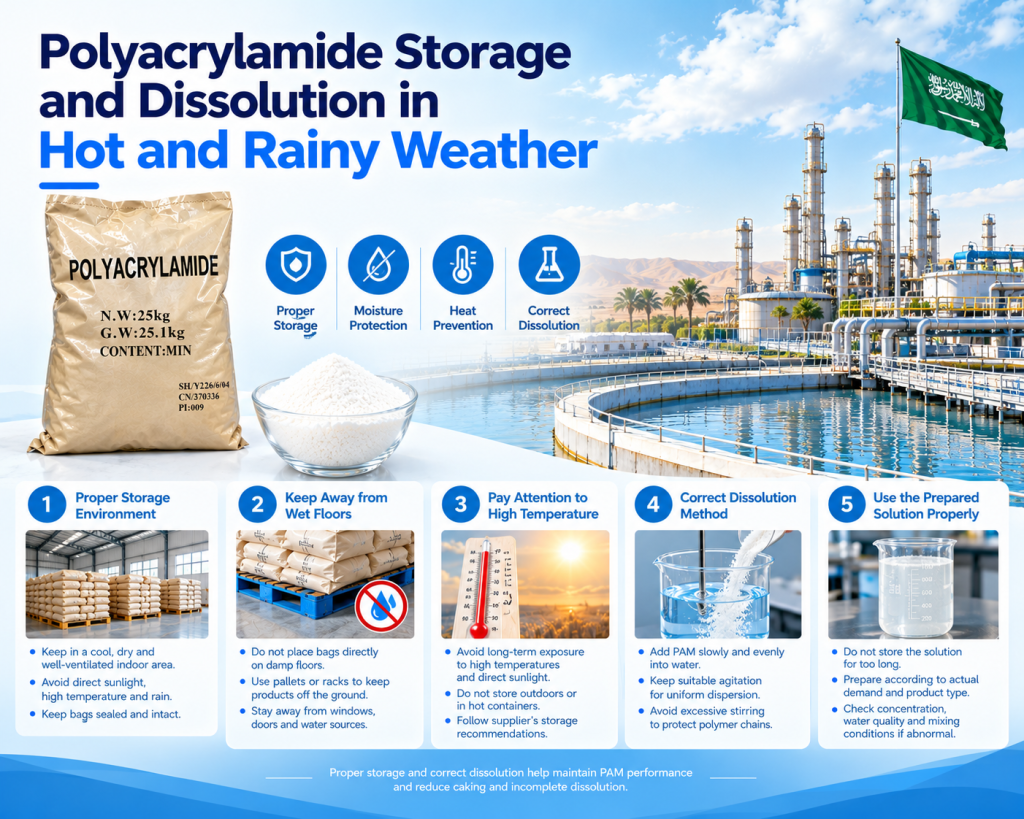
Polyacrylamide Storage and Dissolution in Hot and Rainy Weather
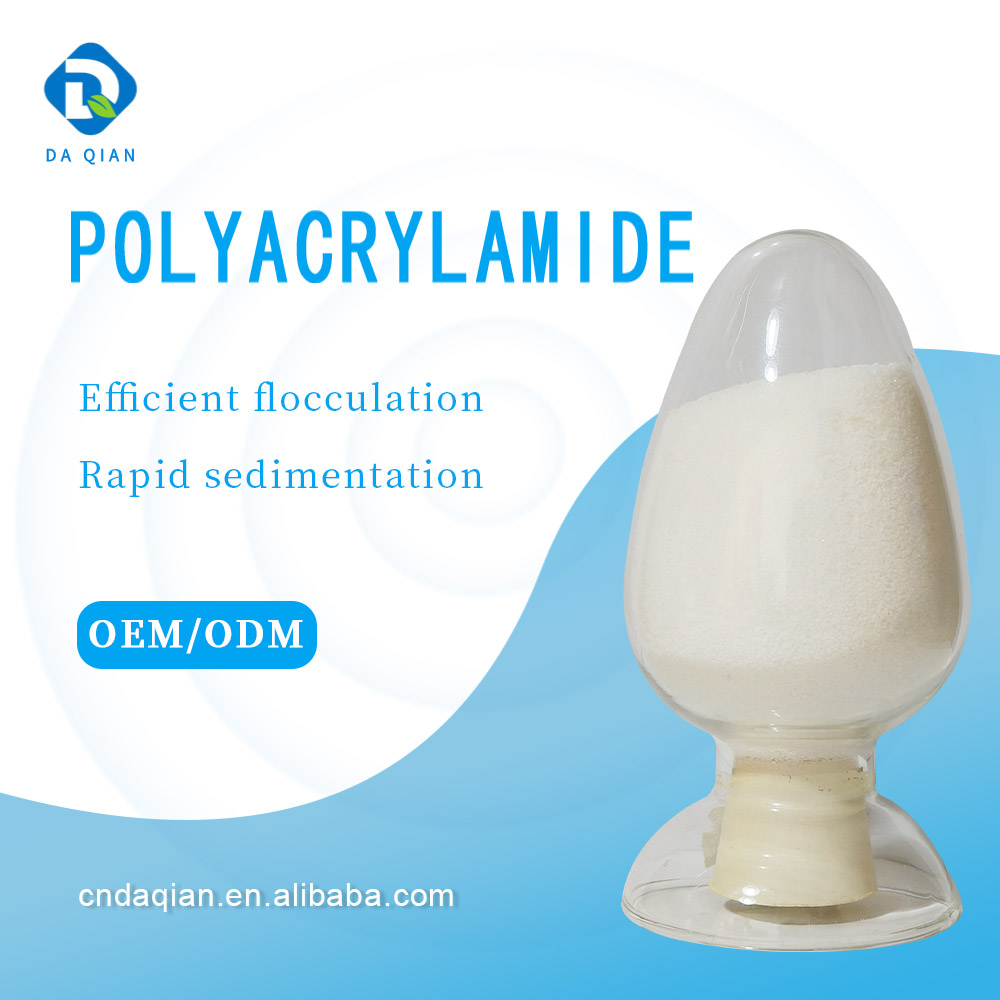
Polyacrylamide (PAM) is a widely used polymer flocculant in wastewater treatment, sludge dewatering, and solid-liquid separation.
In hot, rainy, and humid environments, improper storage and preparation can cause PAM to absorb moisture and form lumps, making dissolution more difficult and potentially affecting application performance. Proper storage and dissolution practices are therefore especially important in these conditions.
1. Store PAM in a Cool and Dry Environment
PAM should be stored indoors in a cool, dry, and well-ventilated area, away from high temperatures, direct sunlight, and rainwater.
The original packaging should remain intact and properly sealed to prevent moisture from entering the product. During rainy seasons or in areas with high humidity, direct exposure to humid air should be minimized.
If the packaging is damaged, it should be resealed or replaced promptly to prevent moisture absorption and caking.
2. Keep PAM Away from Wet Floors
PAM bags should not be placed directly on damp floors.
Using pallets or other suitable supports can help keep the product away from ground moisture. Storage areas should also be kept away from doors, windows, water sources, and locations where rainwater may enter.
Good warehouse ventilation is also important for reducing moisture accumulation.
3. Pay Attention to Storage Conditions in Hot Weather
High temperatures do not necessarily cause PAM to fail immediately, but prolonged exposure to heat, humidity, or direct sunlight may affect storage stability.
During hot seasons, avoid storing PAM outdoors, inside hot containers, or in areas exposed to strong sunlight for extended periods.
Follow the storage conditions recommended by the supplier and use a first-in, first-out inventory management system whenever possible.
4. Proper PAM Dissolution
When preparing PAM solution, the powder should be added slowly and evenly into water while maintaining suitable agitation to promote uniform dispersion.
Avoid adding a large amount of PAM all at once, as this can cause lumps to form and make complete dissolution more difficult.
Excessive mechanical agitation should also be avoided during preparation. Excessive shear may affect the polymer chain structure and reduce application performance.
5. Use Prepared PAM Solution Properly
Prepared PAM solution should generally not be stored for unnecessarily long periods. It is better to prepare an appropriate amount according to the actual treatment demand and follow the recommended concentration and usage time for the specific PAM product.
If the solution shows unusual changes, check the preparation concentration, storage time, water quality, and mixing conditions.
Conclusion
In hot and rainy weather, the key to PAM storage is to prevent moisture, rainwater, and prolonged exposure to high temperatures and direct sunlight. During dissolution, focus on slow addition, proper dispersion, and moderate agitation.
Proper storage and preparation can help maintain PAM performance and reduce problems such as caking and incomplete dissolution.