Company News
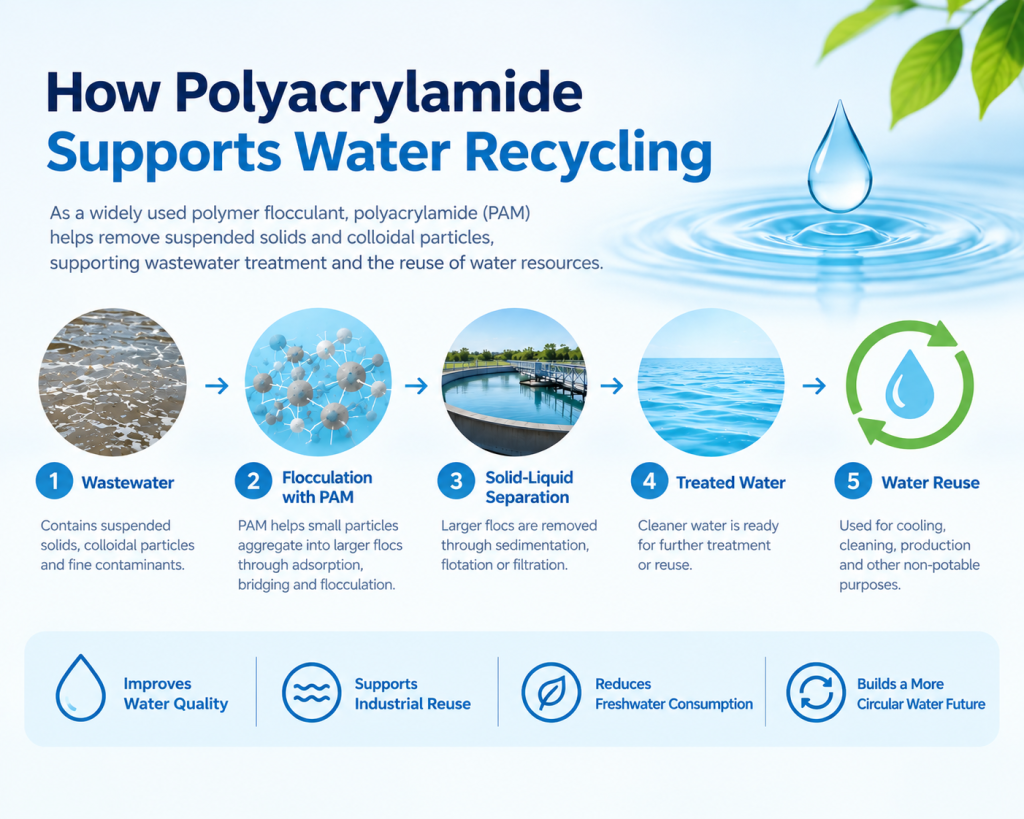
How Polyacrylamide Supports Water Recycling
As industrial development and water demand continue to grow, improving water efficiency and reducing wastewater discharge have become important goals for many industries.
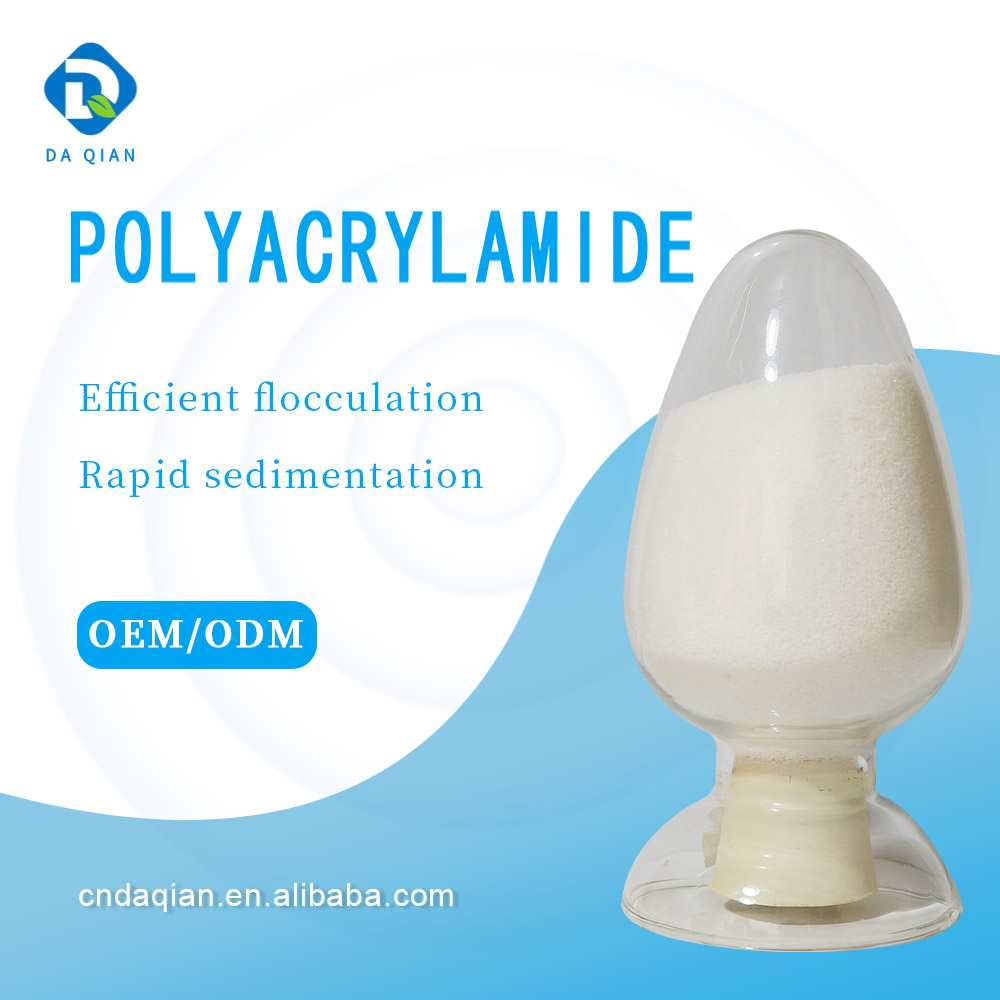
Polyacrylamide (PAM) is a widely used polymer flocculant that can support wastewater treatment and water recycling by promoting the flocculation and separation of suspended solids and colloidal particles.
1. Promotes Solid-Liquid Separation
Many industrial wastewater streams contain suspended solids, colloidal particles, and fine contaminants that are difficult to settle naturally.
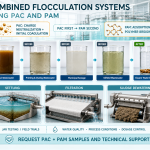
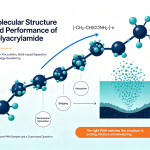
PAM works through adsorption, bridging, and flocculation, helping small particles combine into larger flocs that can be separated through sedimentation or other solid-liquid separation processes.
2. Helps Improve Treated Water Quality
After flocculation, sedimentation, flotation, or other separation processes, part of the suspended solids and particulate contaminants can be removed from the water.
PAM is generally used as a supporting chemical in wastewater treatment and can work together with processes such as sedimentation, filtration, and flotation, helping prepare water for further treatment or reuse.
3. Supports Industrial Water Reuse
Depending on the required water quality, properly treated industrial wastewater may be reused for cooling systems, equipment cleaning, process water, landscaping, and other non-potable applications.
By promoting suspended-solid removal and sludge separation, PAM can contribute to overall treatment efficiency and support subsequent treatment and water reuse.
4. Helps Reduce Freshwater Consumption
The traditional model of using water once and then discharging it can lead to significant freshwater consumption.
A more efficient treatment–reuse–retreatment system can reduce dependence on freshwater resources. As one of the treatment chemicals used in such systems, PAM can help improve solid-liquid separation and contribute to water recycling processes.
5. PAM Selection Depends on Water Quality
Different wastewater streams contain different types of contaminants and require different treatment conditions. Therefore, one PAM product cannot fit every wastewater application.
The appropriate PAM type and dosage should be selected based on factors such as:
- Wastewater characteristics
- Suspended solid properties
- pH
- Water temperature
- Treatment process
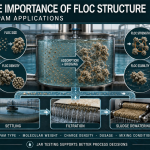
- Floc formation and settling performance
Jar tests or small-scale trials can help determine a suitable PAM grade and dosage before full-scale application.
Conclusion
PAM cannot purify wastewater by itself, but it can serve as an important supporting chemical in wastewater treatment systems.
By promoting flocculation, sedimentation, and solid-liquid separation, PAM can help improve specific treatment stages and create better conditions for further treatment and water reuse.
With the right PAM grade, dosage, and treatment process, wastewater can be transformed from a single-use resource into part of a more circular water management system.
Looking for the right PAM for your wastewater treatment process? Contact us for samples, product specifications, and technical support.