Company News
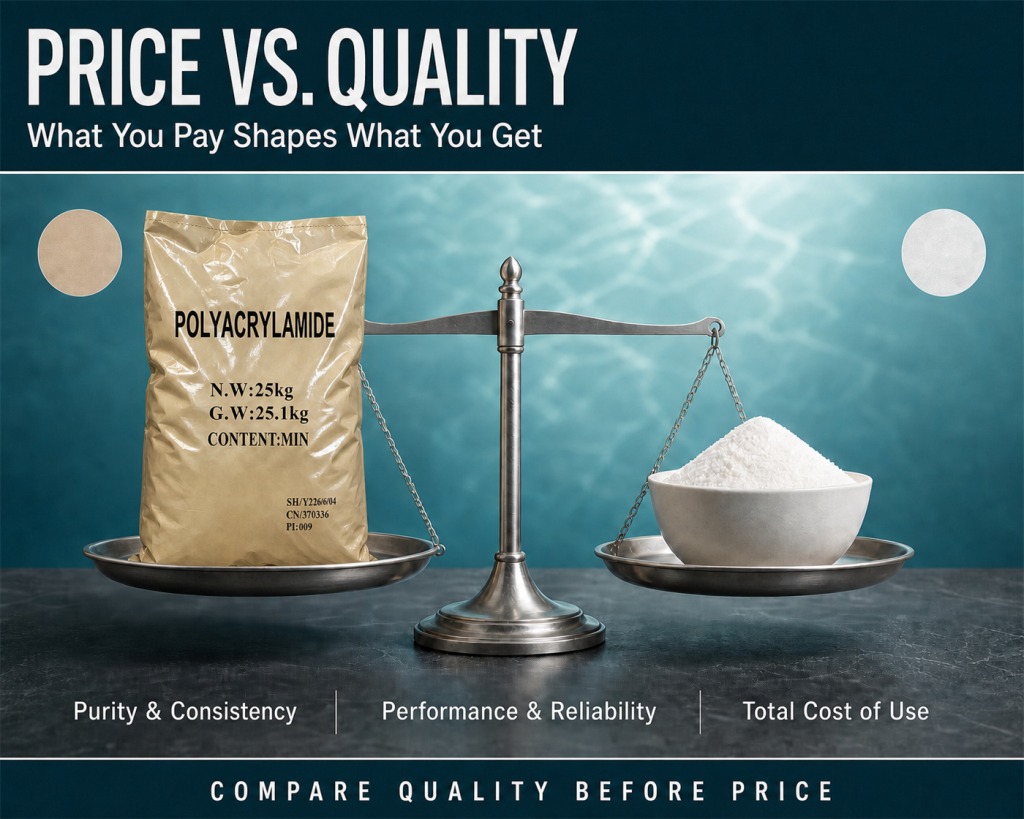
What Is the Relationship Between PAM Price and Quality?
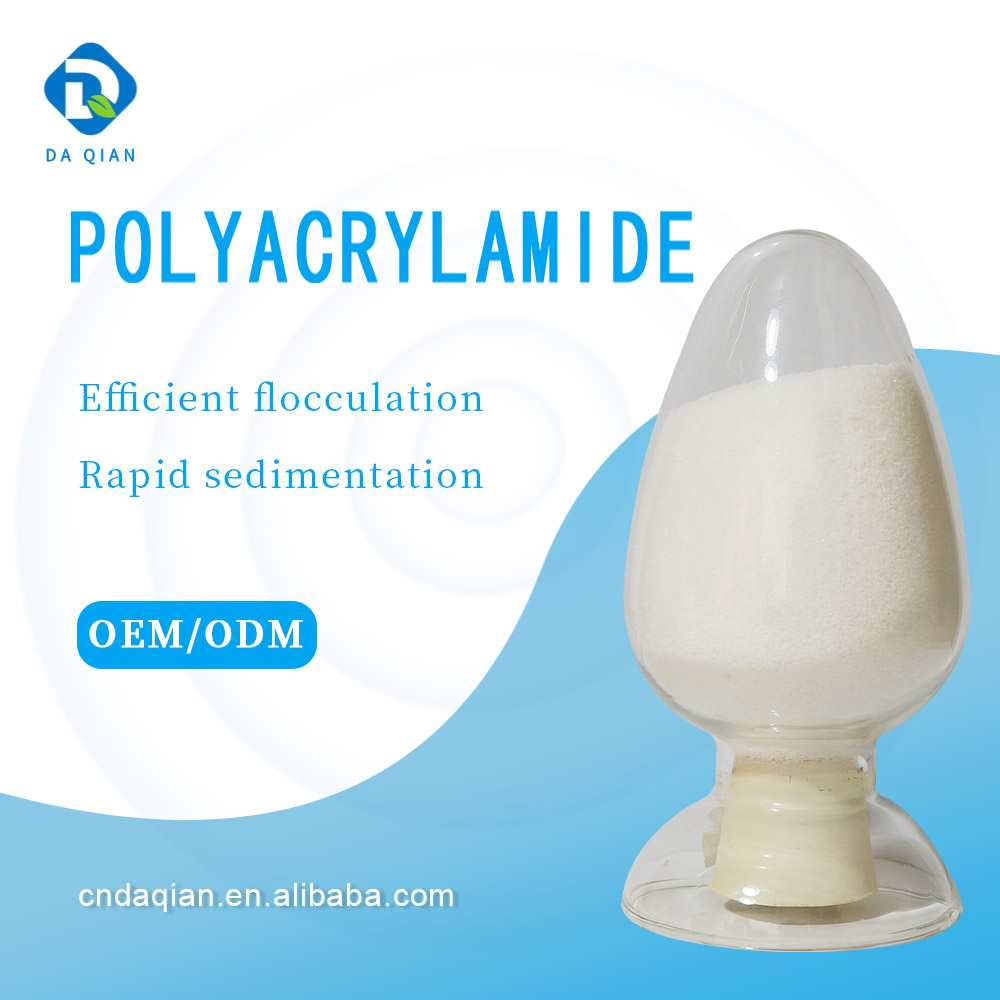
When purchasing Polyacrylamide (PAM), price is often one of the first factors customers consider. However, for wastewater treatment, sludge dewatering, mining, and other applications, a lower price does not always mean a lower total cost, while a higher price does not necessarily mean better suitability.
So, what is the relationship between PAM price and quality?
1. Why Do PAM Prices Vary?
The price of PAM can vary significantly depending on factors such as:
- PAM type, including anionic, cationic, and non-ionic grades
- Molecular weight and charge density
- Raw material and production costs
- Product purity and quality control
- Particle size and dissolution performance
- Manufacturing process and equipment
- Packaging, transportation, and order quantity
Therefore, PAM quality should not be judged by price alone.
2. A Lower Price Does Not Always Mean Lower Quality
Different suppliers naturally offer different prices.
When a PAM product is significantly cheaper than alternatives, buyers should pay closer attention to its actual technical specifications and performance, including molecular weight, charge density, dissolution time, flocculation performance, and batch consistency.
If a lower-priced product requires a higher dosage to achieve the same treatment result, the lower unit price may not lead to lower overall treatment costs.
3. High Quality Does Not Simply Mean “Higher Specifications”
For PAM, a higher specification is not always better.
Different wastewater treatment applications may require different levels of molecular weight, charge density, dissolution performance, and floc strength.
The right PAM should be matched to the wastewater characteristics and treatment process.
Therefore, buyers should evaluate:
Product Specifications + Flocculation Performance + Dosage + Batch Consistency
rather than simply comparing the price per ton.
4. Low-Cost PAM May Create Additional Operating Costs
If the PAM is unstable in quality or poorly matched to the application, it may result in:
- Higher chemical dosage
- Poor floc formation
- Slower settling
- Higher suspended solids in treated water
- Poorer sludge dewatering
- More frequent process adjustments
These issues can increase the overall operating cost of a wastewater treatment system.
That is why it is often more useful to consider the PAM cost per ton of wastewater treated, rather than only the purchase price of the product.
5. How Can You Evaluate PAM Before Purchasing?
When comparing PAM suppliers, consider requesting samples and testing:
1. Technical specifications
2. Actual flocculation performance
3. Recommended dosage
4. Dissolution performance
5. Batch consistency
6. Overall treatment cost
Jar tests or small-scale trials can provide a more practical way to determine whether a PAM product is suitable for your treatment system.
Conclusion
PAM price and quality are related, but price alone cannot determine product quality.
When purchasing PAM, the key is to find a product with stable quality, suitable performance, and reasonable dosage requirements.
Instead of focusing only on the lowest unit price, consider the actual treatment performance and total operating cost. The right PAM can potentially help reduce overall wastewater treatment costs through effective flocculation and optimized dosage.
Need help selecting the right PAM for your application? Contact us for samples, product specifications, and technical support.