Company News
The Importance of Floc Structure in PAM Applications
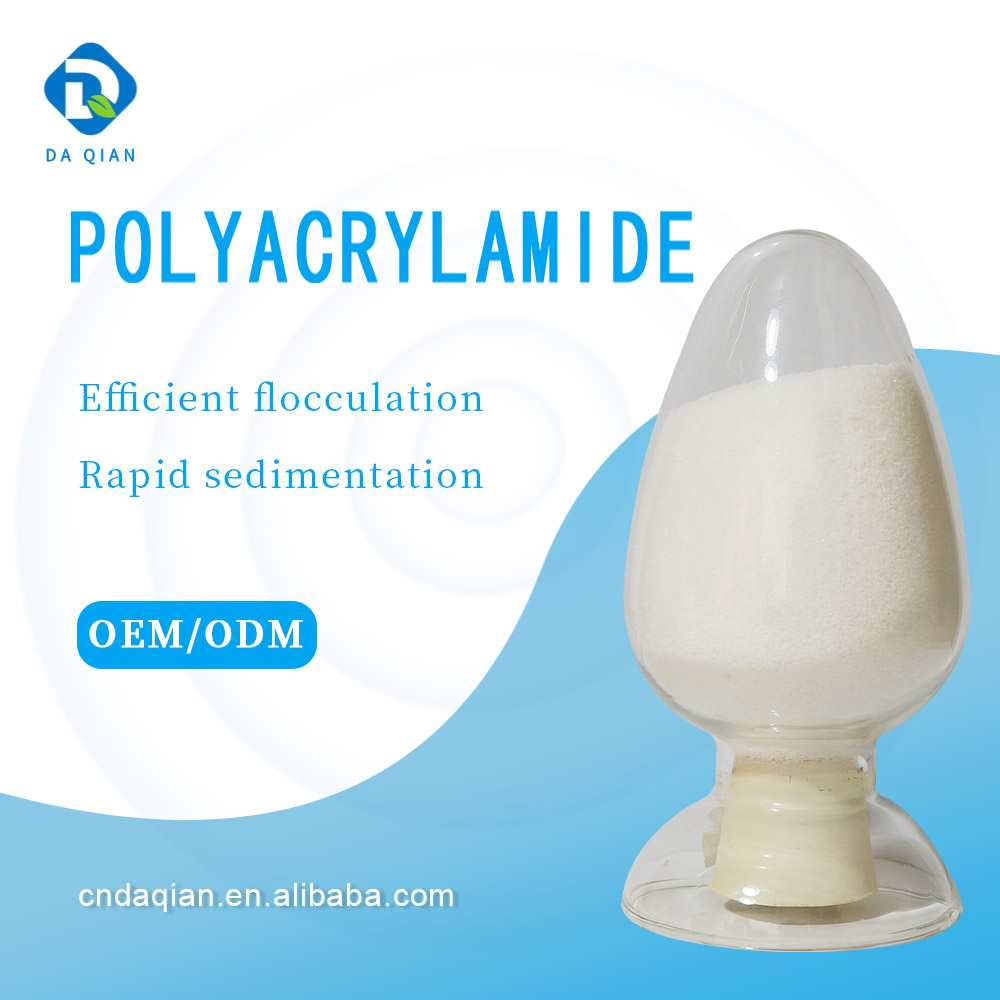
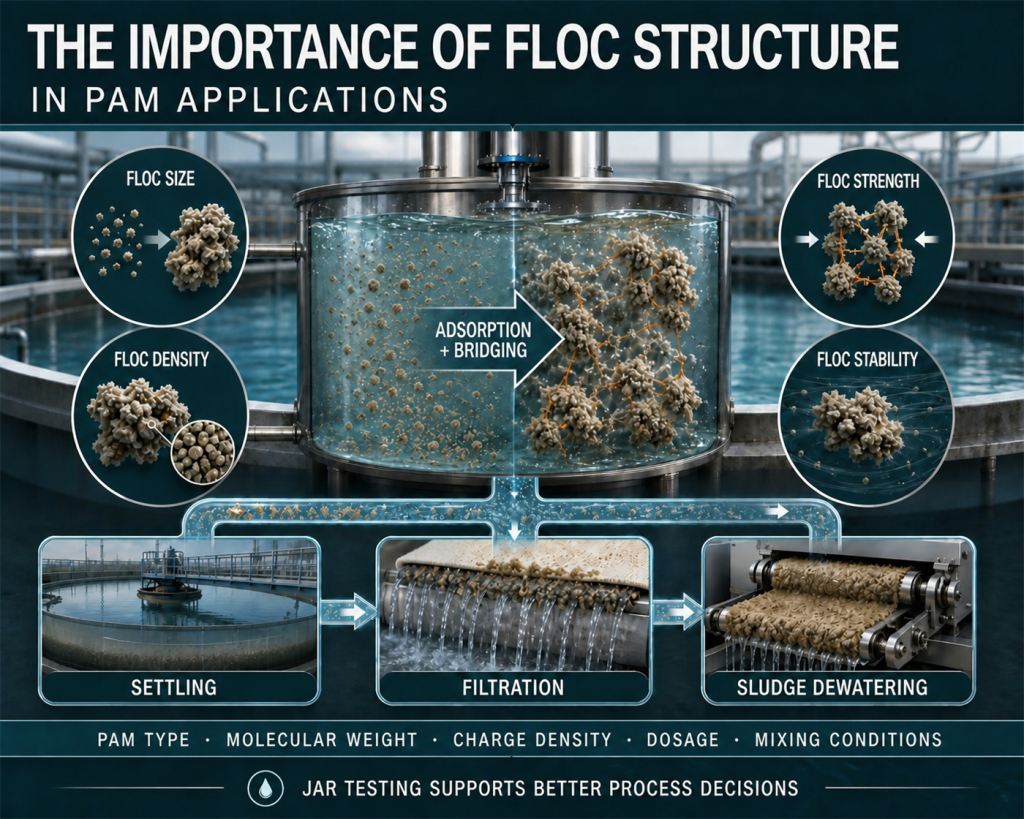
In wastewater treatment and solid-liquid separation, Polyacrylamide (PAM) helps fine particles aggregate into larger flocs through adsorption and bridging.
However, floc formation is not the end of the flocculation process. Floc size, strength, density, and stability can all influence subsequent sedimentation, filtration, and sludge dewatering performance.
1. What Is Floc Structure?
Floc structure refers to the characteristics of particle aggregates formed during PAM-assisted flocculation, including:
- Floc Size
- Floc Strength
- Floc Density
- Floc Stability
A suitable floc structure needs to balance good settling performance with sufficient mechanical strength.
2. Floc Size Affects Settling
PAM helps fine suspended particles combine into larger flocs, making them easier to separate from water.
In many cases, appropriately sized flocs can improve solid-liquid separation and settling performance.
However, larger flocs are not always better. If the flocs are too loose, they may break apart under water flow or mechanical mixing, which can reduce separation efficiency.
3. Floc Strength Affects Treatment Performance
During sedimentation, flotation, filtration, and sludge dewatering, flocs may be exposed to shear forces and mechanical stress.
If the flocs are not strong enough, larger aggregates can break into smaller particles, reducing solid-liquid separation performance.
Therefore, PAM selection should consider not only flocculation speed but also floc strength and shear resistance.
4. Floc Structure and Sludge Dewatering
During sludge dewatering, PAM helps fine particles in sludge form more stable flocs.
A suitable floc structure can facilitate water release from sludge and support the performance of filter presses, centrifuges, and other dewatering equipment.
If the flocs are too loose, water may not separate efficiently. If they are excessively dense, water release can also be affected.
Therefore, floc structure is an important factor in sludge dewatering performance.
5. PAM Type and Dosage Affect Floc Structure
Different PAM grades have different molecular weights, charge densities, and molecular structures, which can lead to different floc characteristics.
PAM dosage also plays an important role:
Insufficient dosage → Incomplete particle aggregation
Appropriate dosage → Better-developed floc structure
Excessive dosage → May change floc characteristics and increase chemical costs
The appropriate PAM type and dosage should therefore be determined according to wastewater characteristics and treatment conditions, preferably through jar testing or small-scale trials.
6. Factors for Better Floc Structure
When optimizing PAM applications, consider:
PAM Type + Molecular Weight + Charge Density + Dosage + Mixing Conditions + Wastewater Characteristics
It is also important to observe floc size, density, strength, settling speed, and stability.
Jar tests or on-site trials can help evaluate how different PAM grades affect floc structure and separation performance.
Conclusion
Floc structure is an important factor in PAM applications.
Effective flocs need more than sufficient size. Their strength, density, and stability should also match the requirements of subsequent sedimentation, filtration, or dewatering processes.
Therefore, when selecting PAM, it is useful to look beyond price or a single technical specification and evaluate the actual floc structure and overall treatment performance.
Looking for the right PAM grade for your wastewater treatment process? Contact us for samples, product specifications, and technical support.