Company News
Why Jar Testing Matters Before Choosing PAM or PAC
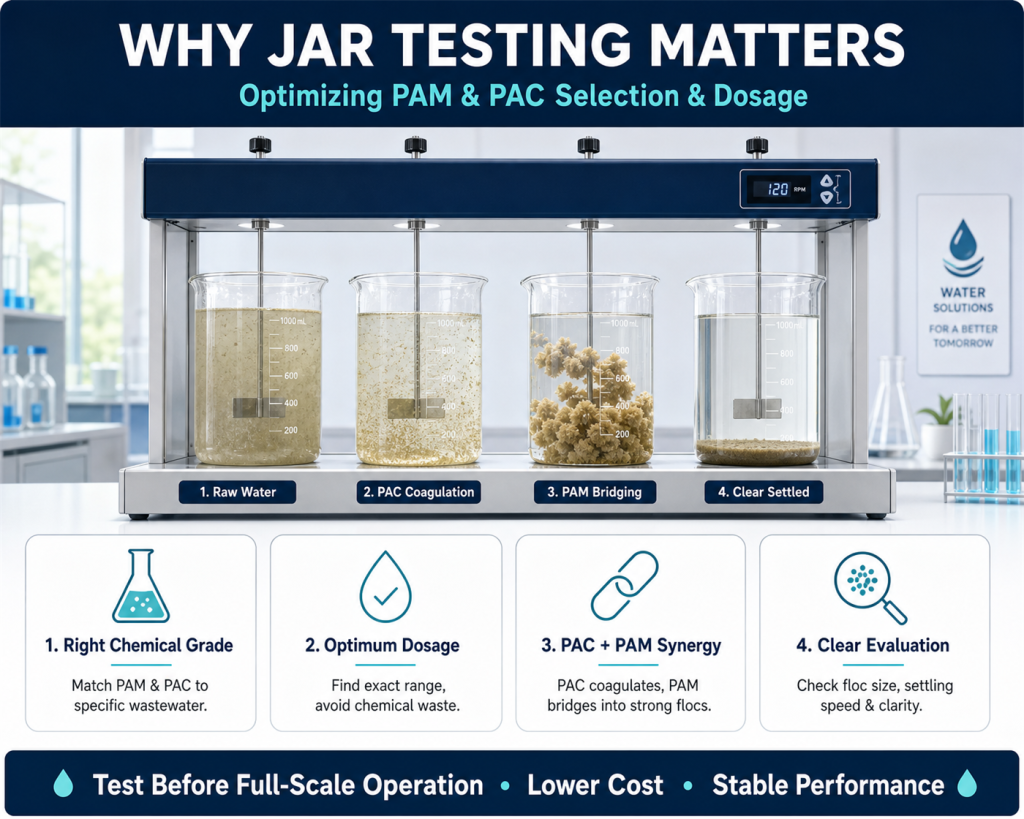
In wastewater treatment, choosing the right chemicals is essential for achieving effective coagulation, flocculation, and solid-liquid separation. Jar testing is a practical way to evaluate PAM (Polyacrylamide) and PAC (Polyaluminum Chloride) before full-scale application.
Rather than selecting chemicals based only on price or general specifications, jar testing helps identify products and dosages that match the actual wastewater characteristics and treatment requirements.
1. Identify the Right Chemical for Your Wastewater
Different wastewater streams contain different types and concentrations of suspended solids, colloids, and organic matter. A PAM or PAC grade that performs well in one application may not deliver the same results in another.
Jar testing allows operators to compare different chemical grades under controlled conditions and observe their performance with the actual water sample.
2. Optimize Chemical Dosage
Chemical dosage has a direct impact on treatment performance and operating costs. Too little chemical may result in poor floc formation, while excessive dosing can increase chemical consumption and may negatively affect the treatment process.
By testing different dosages, operators can identify a suitable operating range and avoid relying on guesswork.
3. Improve Floc Formation and Solid-Liquid Separation
PAM and PAC play different but complementary roles in many wastewater treatment systems.
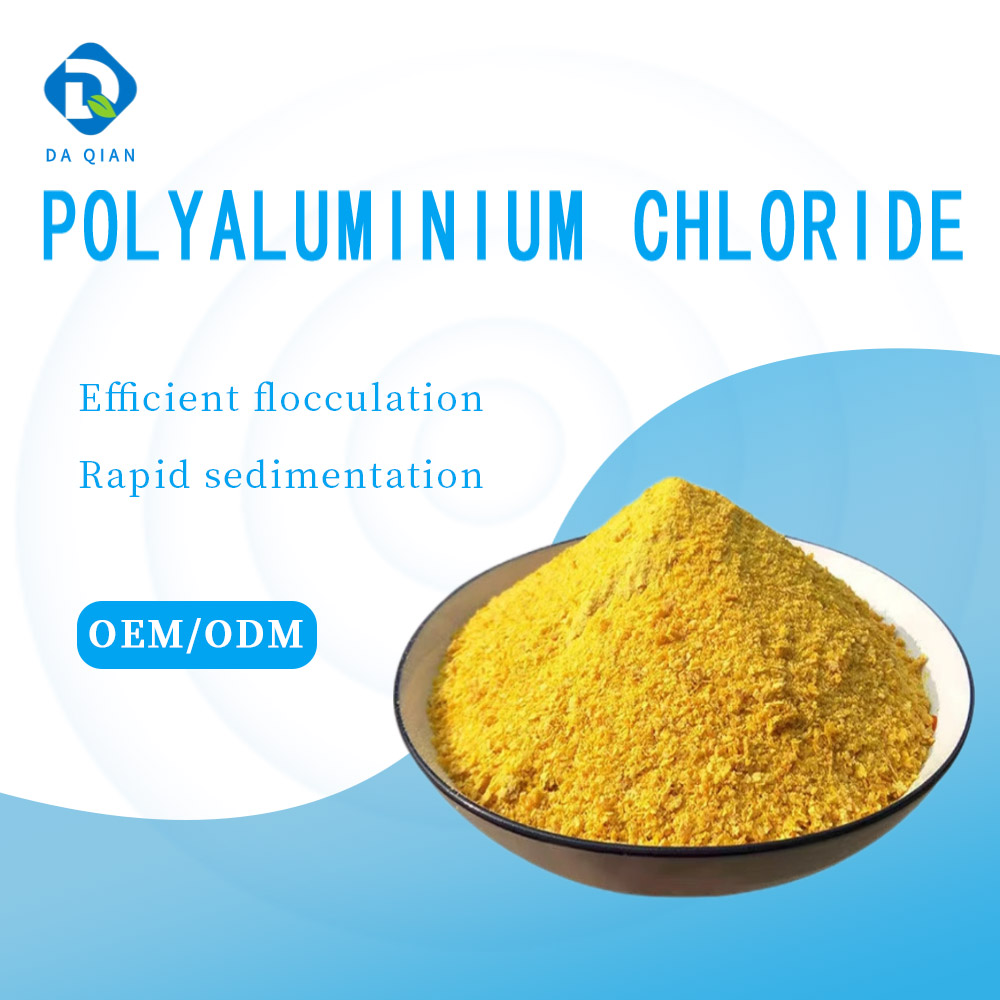
- PAC helps destabilize suspended particles and promotes initial coagulation.
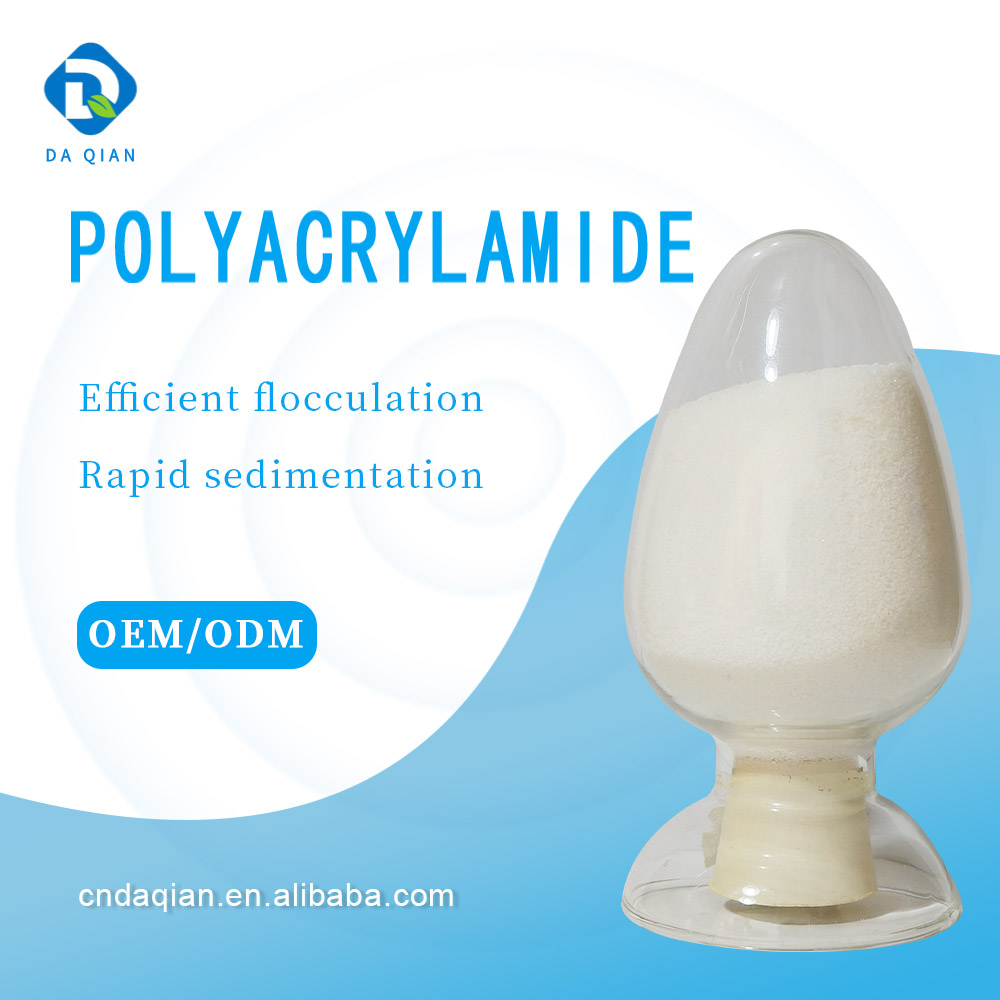
- PAM helps particles aggregate into larger flocs through adsorption and bridging, supporting sedimentation or other separation processes.
Jar testing helps evaluate floc size, formation speed, settling behavior, and the clarity of the treated water. It can also help determine whether PAC and PAM work better individually or in combination.
4. Reduce Trial-and-Error in Full-Scale Operations
Conducting jar tests before full-scale application can help reduce unnecessary chemical consumption and limit process adjustments during commissioning or routine operation.
It also provides useful information when wastewater quality changes, treatment targets become more demanding, or a new chemical grade is introduced.
5. Key Factors to Evaluate During Jar Testing
For meaningful results, consider the following factors:
- Chemical type and grade: Compare suitable PAM types and PAC products.
- Dosage: Test different concentrations to find an effective range.
- pH and water quality: Check whether water conditions influence coagulation and flocculation.
- Mixing conditions: Follow a consistent mixing procedure when comparing samples.
- Floc characteristics: Observe floc size, strength, and formation time.
- Settling and water clarity: Evaluate sedimentation speed and the appearance of the supernatant.
The best result is not necessarily the sample that forms the largest flocs. Overall performance should be assessed according to the treatment objective, separation efficiency, sludge characteristics, and operating cost.
Conclusion
Jar testing turns chemical selection into a more informed, evidence-based decision. By evaluating PAM and PAC under conditions that reflect the actual wastewater, treatment operators can select more suitable products, optimize dosage, and improve process stability.
The right chemical selection starts with understanding your water—not simply choosing a product from a specification sheet.
📩 Looking for suitable PAM or PAC for your wastewater treatment process? Contact us for product specifications, sample testing support, and technical recommendations.